-
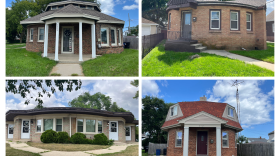 In the mid-1900s, a Racine man named Anton Kratochvil built more than 20 round or semi-circular houses and apartments in southeast Wisconsin. But why round?
 -
 Frank Lloyd Wright is arguably the most famous architect in history, and he's most closely associated with Wisconsin where he was born and lived much of his life. But a lot of his work was done outside of the state, including nearby Illinois which is home to a quarter of his remaining buildings.
 -
 Doors Open Milwaukee celebrates 15 years since its first event in 2011. Learn how the event got started, and what keeps people coming back.
 -
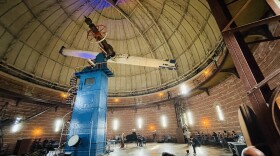 Yerkes Observatory near Lake Geneva is more than 125 years old, is the site of numerous scientific discoveries, is home the world's largest refracting telescope and has been visited by the likes of Edwin Hubble, Carl Sagan and Albert Einstein.
 -
 The stone used for this church's exterior was born out of the aftermath of volcanoes tearing North America apart about one billion years ago.
 -
 On a triangular lot on Milwaukee's north side stands a building with ancient sea fossils embedded in its structure.
 -
 The Wisconsin Gas Building may be best known for its flame-shaped lamp, but the story of this Art Deco masterpiece begins over three billion years ago.
 -
 Constructed in 1895, Milwaukee’s City Hall remains one of the oldest continuously used city halls. But its story begins almost a half-billion years ago.
 -
 The theater in Frank Lloyd Wright's Taliesin home appears to rise naturally from its sloped surroundings in Spring Green, Wisconsin. Yet shoring up and upgrading the Hillside Theater over the past five years has been a gargantuan and expensive task.
 -
 Raymond Wiggers is a geologist, science writer and author of the new book "Milwaukee in Stone and Clay," which chronicles dozens of different types of rocks that buildings in our city are made of and how they got here.

© 2026 Milwaukee Public Media is a service of UW-Milwaukee's College of Letters & Science
Play Live Radio
Next Up:
0:00
0:00
Available On Air Stations


