

The library is more than just books, and WUWM’s Books and Beyond series with Milwaukee Public Library showcases just that. We share resources, book recommendations and some cool stuff you might not know about.
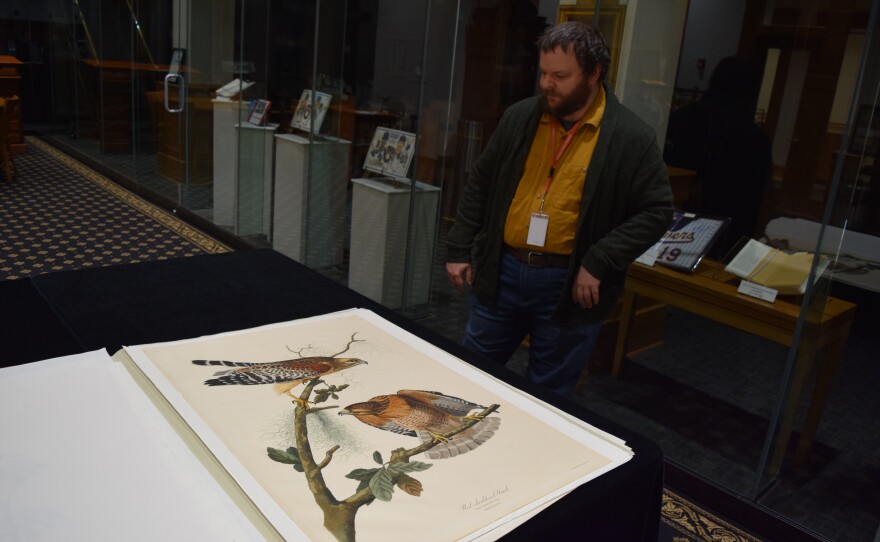
For this edition of Books and Beyond, we’re learning all about the complete collection of John James Audubon’s Birds of America prints housed in Central Library’s Rare Books Room.
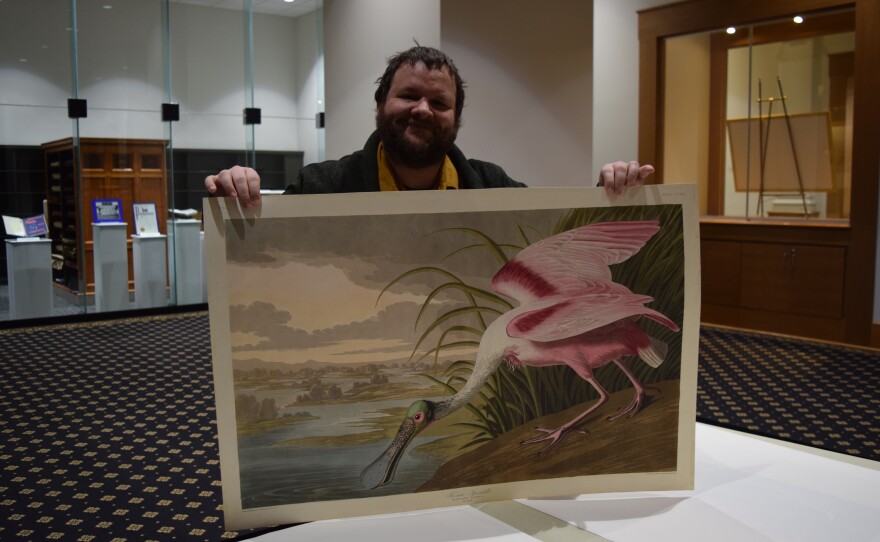
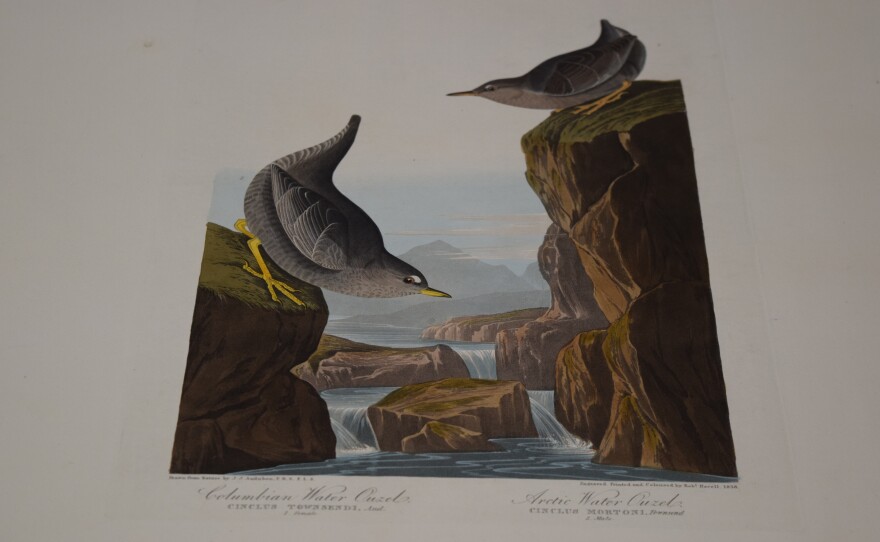
The collection showcases 435 life-size, hand colored species of birds with incredible detail. It merged 19th Century art and science and are considered foundational to American conservation. It revolutionized ornithological illustration not only by depicting the birds as life-size, but also showing them in natural habitats and in dynamic poses. MPL's complete collection of Audubon prints is one of about 120 full sets in the world today.
MPL's set was donated to the City of Milwaukee in 1945 by the Schlitz Brewing Company according to rare books librarian Timothy Rush. "That [original] set was owned by naturalist George Bird Grinnell. He was a conservationist, one of the founding members of the Audubon Society and he donated it to his alma matter Yale, and eventually Yale had too many and so they then sold that off, and we as Schlitz ended up purchasing that."
Rush notes the original intention behind the set was not specifically for the library, but to be framed and sent out to local schools. "[The art was] to encourage the young people of Milwaukee to become conservationists, to be inspired by nature and be encouraged to do things with it, and it did that for a very long time," he adds.
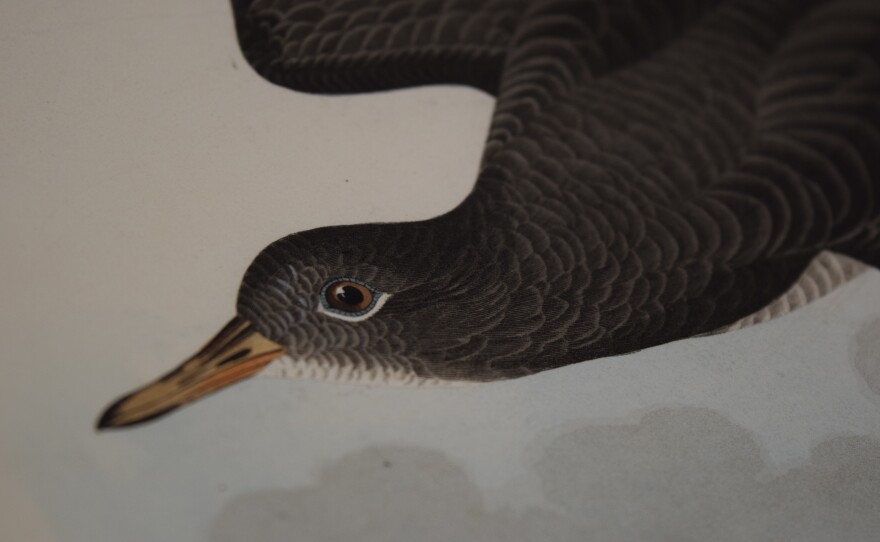
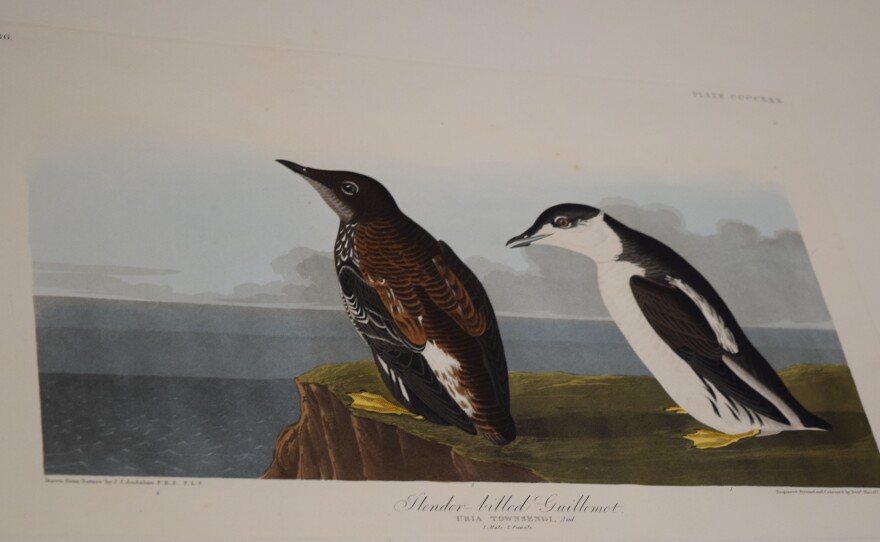


When Birds of America was first issued, it was in smaller sets of individual plates that were unbound. "The set that we have is the original oversized format which is known as the double elephant folio," notes Rush. "The plates are 29 1/2 inches by 39 1/2 inches, which is massive... It took from 1827 until 1838 to finish issuing this because it was like a subscription service. Instead of Netflix, you got just birds sent to your home every so often, obviously for the affluent."
Audubon had a passion of the natural world and also drew small mammals in addition to birds. "He endeavored to try and capture with a greater eye to scientific detail these wonders of nature ... at the finest of details," explains Rush. "He painted them and then they were inscribed onto big engraved plates that would then be colored by a team of artisans in London, and it really was just a massive undertaking."
While the art in Birds of America certainly holds up, the scientific work does not over time. "There are lots of instances where you run into birds that are probably misidentified or perhaps just like never existed in the way that [Audubon] has shown them," notes Rush.


While the Audubon paintings continue to be celebrated today, Audubon's life and legacy has been widely reexamined. He was a slaveholder, held white supremacist views and dismissed the abolitionist movement. Many formerly named Audubon societies are moving away from the namesake to make birding and conservation more inclusive. For example, Madison Audubon is now the Southern Wisconsin Bird Alliance, and the national Audubon Society is reexamining the life and legacy of the organization’s namesake.
"As time goes on we have this sort of duty to reevaluate these figures that we uphold," says Rush. "It is important to look at historical figures as people ... and John James Audubon can be two things at once: he can be one of the most beautiful artisans ... as well as a man who wrote about experiences with runaway slaves where he props himself up as the hero for having returned them to slavery, because he instead got them to be bought back by a 'kinder master' than the one that had been abusing them, which is one of his own actual written accounts of his expeditions. So he is a complicated figure and he is not unique amongst our collection — there are many people in the rare books collection that are remembered for their achievements and it is important that we also remember the darker marks that they have on their personal lives and their legacies."
As Rush has gained more experience handling the Audubon collection, he admits he's come to value it more than he initially did. "It is one of those things that we of course share with the world that we have this you know expensive rare item, but it usually felt like something that wasn't specifically of Milwaukee to me. But now having worked with it first hand for several years, you are always struck with how beautiful nature is and how these birds just seem lifelike on the page... It is such a landmark that it is gorgeous to have and being able to share this."
To make an appointment to see the Audubon collection for yourself, as well as any other items in the Richard and Lucile Krug Rare Books Room, contact mplarchives@milwaukee.gov.


