A flurry of activity is coming to Lakeshore State Park near Milwaukee’s Summerfest grounds Saturday.
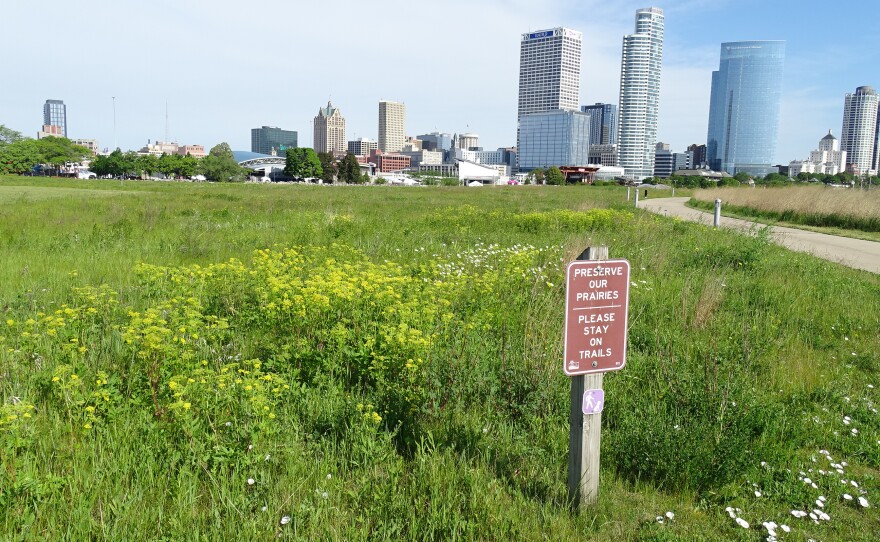
Volunteers will plant 2,000 native perennial plants in the 22-acre park. It’s an effort to restore monarch butterfly habitat on their migration path through Wisconsin.
A couple of days before the event, Eric Manges with Johnson's Nursery was busy spraying fluorescent pink dots of paint across a stretch of earth.
“Well, this process is the finish line after over six months of formulating a plan, growing plants and now we're doing the final step, which is digging the holes — which is actually the hardest step out of everything — so that we can get these amazing native plants in ground,” Manges says.

Manges is passionate about enhancing native habitats, as well as weather. He was a TV meteorologist before joining the Johnson’s Nursery team.
Park manager Elaine Zautke is delighted with the project Manges is spearheading at Lakeshore State Park.
“This was just a really good connection to make, because every year we try to plant little native plugs, but those take a while to grow, and it can be years until we see our efforts come to fruition. And so this was a really great opportunity to see some larger plants get installed that will enhance the park right away, and be a great addition to our created prairie in a way that the public can enjoy,” Zautke says.

Manges says the plants come with benefits as soon as they settle into the soil.
“From day one, they're gonna act as a host plant. Many insects need to consume native plants to fulfill their life cycle. Now, we always think of pollen and nectar as what wildlife needs, but they also need leaves and blades of grass to consume,” Manges says.
The natives’ root systems will penetrate deep into the earth.
“So this year, let's keep our expectations of establishment. But then year two, year three, is when they're gonna explode upwards. And these are very beautiful flowers to look at — subjectively and objectively. They're quite important that way to the human bias, but also to wildlife,” Manges says, “It's gonna be pretty awesome.”
This conservation initiative is about more than monarch butterflies.
“We're tricking people. We're starting with a charismatic species, the monarch, but really we're actually supporting hundreds of other insects too,” Manges says.
"What we're doing is we're creating a diverse ecosystem next to a place that people frequent all the time. We've had dozens of people walk by already.”

Manges says people need to see projects like this up close in order to care about biodiversity.
“This event is just a drip in the pan of what's needed across the entire United States, but it is a good start. I think it's gonna help lift every person involved and it just gets people excited. You see other people doing this kind of work, it's contagious,” he says.
Zautke says it's going to be a great community day.
“Getting folks out here, helping put these plants into the ground. No digging, thankfully, just...taking plants out of the pots and putting them in the ground for us. So it's pure fun,” Zautke says.
If you’d like to volunteer at the Monarch Flyway project June 13, you can register in advance, or just show up at Lakeshore State Park between 10 a.m. and 2 p.m.
_