On May 16, Indigenous people gathered near the Milwaukee River in Glendale to celebrate Native cultures and to share them with the broader community. The event was sponsored by the Community Advisory Committee.
Part of the event focused on the role Indigenous people have played in a successful 20-year effort to restore sturgeon in the Milwaukee River.
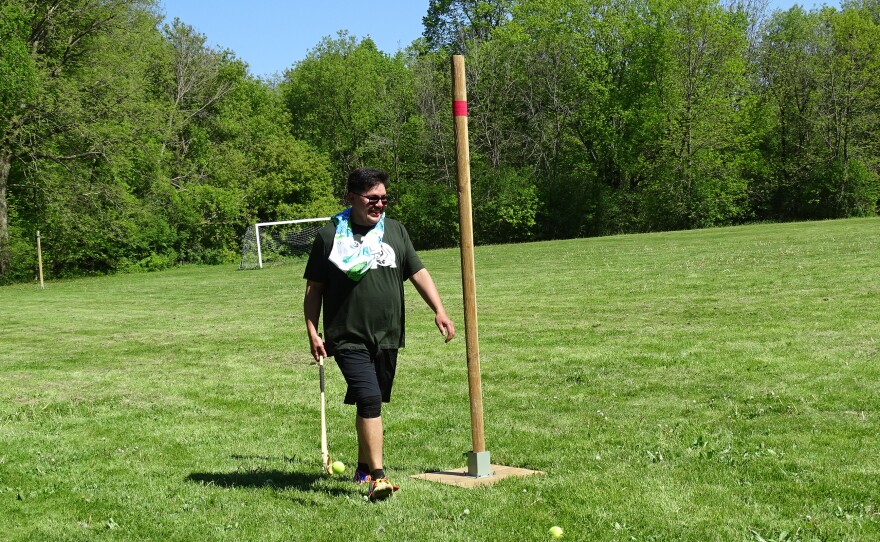
The centerpiece was a traditional game of lacrosse — an example of reviving what ancestors left for their people.

Sapatis Menomin welcomed about 80 people to a sun-drenched field in Kletzsch Park.
“I want to thank you guys for coming down and bringing your crew. I know it’s a long drive,” Menomin said.
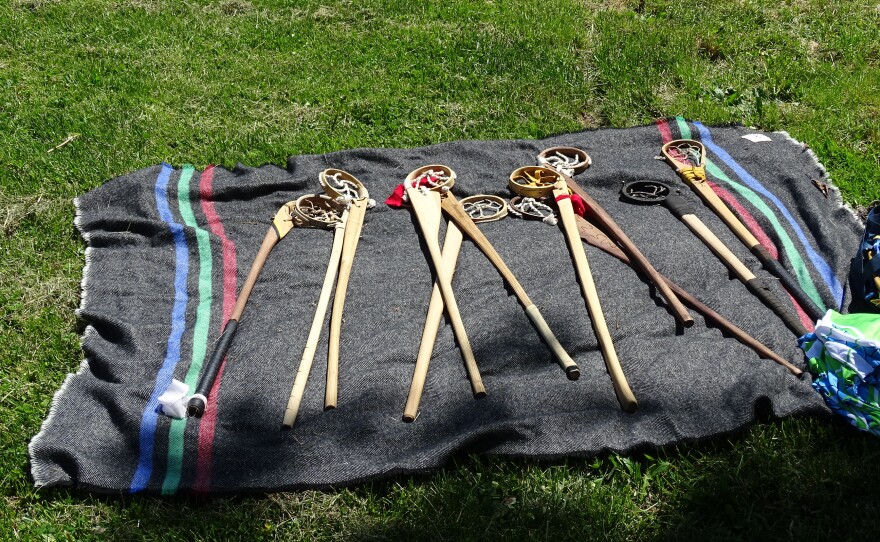
He traveled from Green Bay with a collection of lacrosse sticks, ready to share them at the "Welcoming The Sturgeon Home" gathering. Menomin crafts sticks out of hardwood, each with a small hoop at its end to cradle to a ball.
“You guys are going to see some really skilled players out here later on,” Menomin said.
People from the Menominee Nation made the trip. So did a dozen or so from the Bad River Band along the shores of Lake Superior, including Makwaninj.

“I started learning like when I was like 6, but then I took a long break after and I recently got back into it again, like last year. A lot of my friends wanted to go play so we went to go play,” Makwaninj said.
He demonstrated fundamentals of the centuries-old game, like scooping the tennis-ball sized orb from the ground with his stick.
“It’s like the letter c and you’re kind of flicking it when you come back up,” said Averie Anderson of the Oneida and Menominee Nations.
She orchestrated the gathering and coaches lacrosse at the Indian Community School in Franklin.
“And to pass it, you’re going to stop right here in line with your shoulder and your head so it’s not going down to the ground. You want it to stay up in the air so whoever you're passing to can catch it,” Anderson said.
To score, “Either hit the post with the ball, which these are small posts, right? You have to have some skill. Or you can touch the post with the ball in it,” Anderson said.
This is about the art of traditional lacrosse, not the version played by non-Indigenous people.
Visitors got a chance to try their hand, before the official game began.
The teams took to the field barefooted. They held their sticks high, then after an official whoop, seasoned players soared across the field, scooping and passing the ball to teammates.

When she wasn’t on the field herself, Anderson coached from the sidelines, “Defense! Go with him – help him out,” she shouted.
Room was made for little ones too, like a determined 5-year-old, her heart-dotted dress flying in the wind.
No one talked about the winner. Every player picked a prize of their choice.
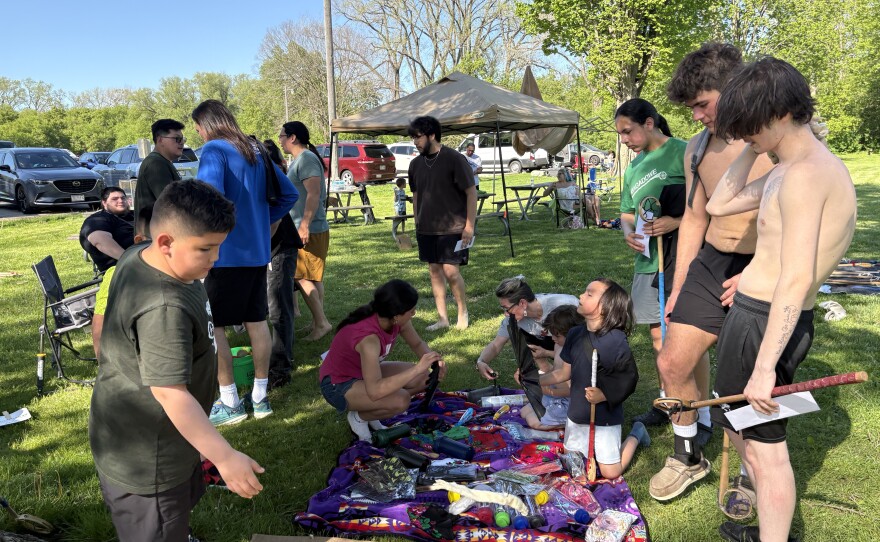


Donovan Waupouse of the Menomonee Nation came bearing gifts, including a ball he made especially for the game. He prepared buffalo meat to share at the post-game feast.
Waupouse co-leads an initiative to restore the connection between youth and the land, while restoring that land.
He was moved by the significance of the day, “Beautiful, it was very beautiful. It was good to see all the little kids getting out and playing and thinking of being in this area – and running barefoot on the ground – connecting. It’s been a long time, but it feels good that we get to do it today. That’s what I have to say about that – it feels good to be able to do that today,” Waupouse said.
There was significance to the site of the game, too.
It was chosen for the "Welcoming The Sturgeon Home" celebration because the Milwaukee River runs through Kletzch Park.
A fish passage built alongside the dam there made it easier for fish like sturgeon to swim upstream in their quest to spawn.
The passage was a critical component of the 20-year-and-counting sturgeon restoration project. This spring, sturgeon were spotted along the river 20 miles north of Lake Michigan for the first time in more than a century.

Mark Denning of the Oneida Nation says sturgeon had been hunted and killed almost to the point of extinction.
He says sturgeon and Indigenous people share a deep history.
“At one time, there were hundreds of thousands of us in the Great Lakes area. We were hunted, people trying to exterminate us and destroy us, remove from our homelands,” he says.
Like sturgeon, Denning says Native communities found their way back, “And we’re trying to revive some of the things that have been left to us by our ancestors,” including the centuries-old game of lacrosse.
_