

Milwaukee’s Third Ward has lived through many chapters. From a marshland to a manufacturing hub, to a massive fire, rebuilding and more, the Third Ward did not always look like the neighborhood we see today.
To learn more about that history, and how the Historic Third Ward Association has shaped it, WUWM’s Audrey Nowakowski spoke with Jim Plaisted, executive director of the Historic Third Ward Association.
Early history
The Historic Third Ward rests on marshy lands along the Milwaukee River, which were once occupied by Ho-Chunk, Menominee, Potawatomi and Ojibwe tribes. In 1833, these lands were forcibly ceded to speculators Solomon Juneau and Morgan Martin.
In the decades that followed, the Third Ward became a heavily Irish neighborhood — until an 1892 fire displaced nearly 2,500 residents and devastated the built environment.
“[There were] a lot of wood structures, both commercially and residentially, and over 400 of them were destroyed by this catastrophic fire,” Plaisted notes.


After the fire, the neighborhood was rebuilt — this time with brick. As the Irish moved elsewhere, Italian immigrants moved in, establishing groceries, warehouses, factories and more.
Steel awnings that once provided shade for produce can still be seen on North Broadway's Commision Row, along with former factory buildings like Milwaukee Street's Phoenix Building and Buffalo Street's Dye House, both of which were used for making hosiery.
“Instead of the 100,000 square-foot, single-story buildings out in Greenfield, they did it with these five-, six-, seven-story vertical [buildings],” notes Plaisted. “The product would come in at the bottom and go up to the top.”
A turning point for the neighborhood
The 1970s brought another turning point for the neighborhood. With the decline of industry came questions about how to use abandoned warehouses and factories, and some aimed to turn the Third Ward into a red-light district.
“In the mid-70s, there was an alderman representing the district, and he had proposed to make the Third Ward a red-light district – so nightclubs, strip clubs,” Plaisted explains. “Just take all these vacant warehouses and throw all the obnoxious night businesses down there.”
Other residents had a different vision for the neighborhood, helping to found the Historic Third Ward Association (HTWA).


“Several property owners that were still there, still invested in the Ward said, ‘No, we're not doing that.’ So they formed the Historic Third Ward Association in 1976,” Plaisted says. “That begat this long, 50-year process that we're at today – of preserving those buildings, first and foremost, and starting to guide the rehabilitation, the redevelopment, and the mix of businesses that we find today.”
The decade saw the rise of gentrification, as abandoned factories and warehouses were converted to condos, apartments, restaurants, bars and specialty shops.
Harnessing the BID
The Third Ward saw further development in the 1980s, leading to the mix-use neighborhood we know today. In 1984, the neighborhood received its historic designation. That same year, the Wisconsin State Legislature established the Business Improvement District (BID) system, allowing commercial districts to tax themselves. The Third Ward was an early-adopter of this system, establishing Milwaukee's first BID in 1987.
"[A BID is] a commercial taxing district where the property owners get together, ask the city to create this district, and then create a mechanism to tax themselves more than they're already taxed. But they get to keep those resources financially," Plaisted explains. "That became kind of the financial engine to pool those resources of all those commercial property owners, and then that started the process of the federally-designated district and then creating the Architectural Review Board," he adds.
Typically, Milwaukee neighborhood organizations go through the Historic Preservation Commission during re-development efforts. Instead, the HTWA established its own Architectural Review Board to strike its own balance between historic preservation alongside mixed-use development.
"It was really a request from those stakeholders at that time to the city: 'Let us control this. We'll preserve the buildings, but we'll guide development going forward, because we know where we want to go,'" Plaisted explains. "So there were guidelines that were created that the Architecture Review Board uses to this day that talk about rehabilitation, but also are very open-minded about new development."
1990s to today
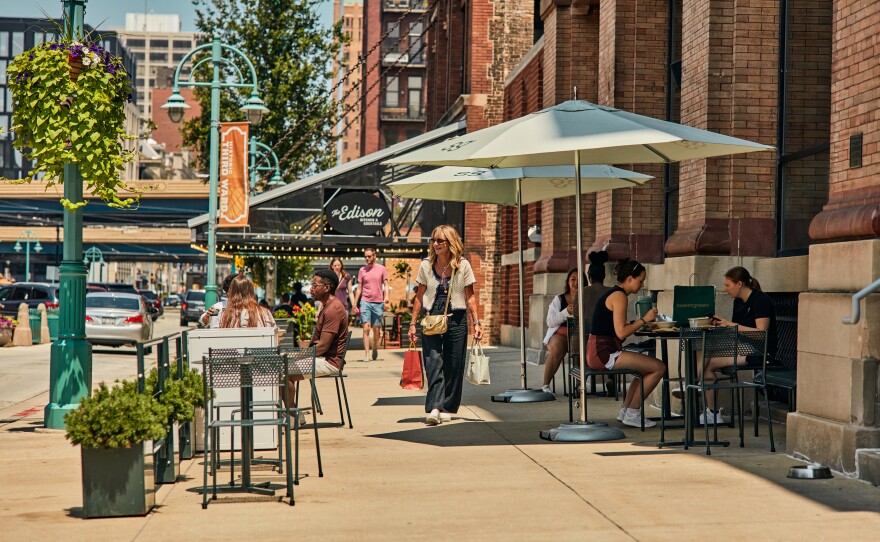
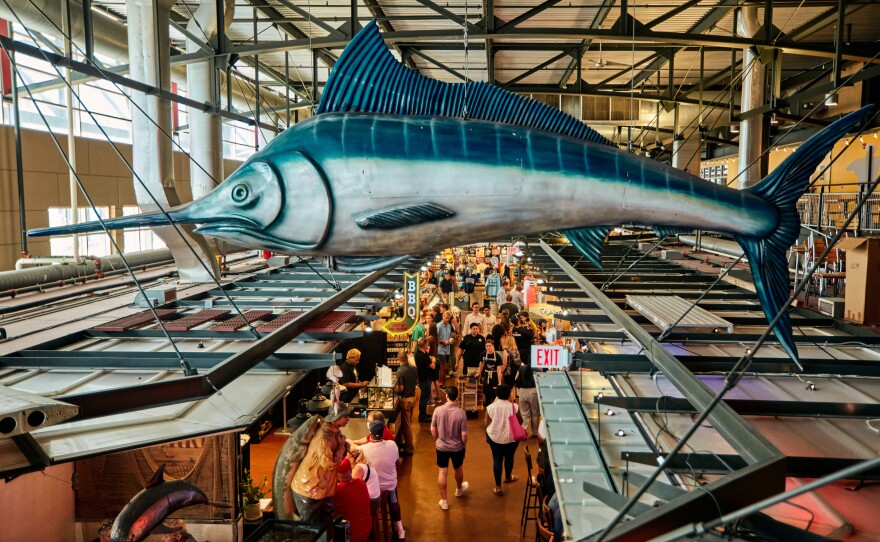
The BID took additional entrepreneurial risks in the next two decades. In the late 1990s, they built two parking structures to provide additional revenue. In 2005, the Milwaukee Public Market was built.
"It's one of the biggest traffic generators in southeastern Wisconsin to its building. They have over two million visitors a year," Plaisted says. "There's so much to do in the Third Ward and a lot of it spins off the market. We've created this kind of environment that is truly mixed-use. And it's also one-stop for entertainment and shopping and especially our great culinary scene."

With growth has come gentrification. The Third Ward is one of Milwaukee's most expensive neighborhoods. According to realtor.com, the median sale price for home and condo listings is $553,500, while rent averages around $2,620 a month. That won't change without political will and investment in affordable and workforce housing, says Plainsted.
"Until we get some opportunities where land is available ... to work on workforce housing or affordable housing. Until then, the market is kind of driving it," he says. "And as long as we have these kind of residential development opportunities, I think they're going to be on the higher end because, again, the land values are so high."
Celebrating 50 years
To celebrate its 50th anniversary, the Historic Third Ward Association is hosting the Third Ward Moon Festival. The festival will feature food drink, music and Luke Gerram's "Museum of the Moon" — a 23-foot wide, illuminated replica of the moon, created with photos from NASA. The installation was first brought to the Third Ward in 2019, and Plaisted says they're excited to bring it back.

"We want people to come down, experience the moon, enjoy it with their kids, and then go out to the neighborhood and enjoy everything we offer," he says.
The festival runs Aug. 8-9. You can find the daily schedule and more information here.
The Third Ward Historic Association is a financial sponsor of WUWM.


