A group called Friends of the Monarch Trail has worked for almost 20 years to restore monarch butterfly habitat on 22 acres of the former Milwaukee County Grounds in Wauwatosa.
Butterflies stop there on their migration south to Mexico for the winter.
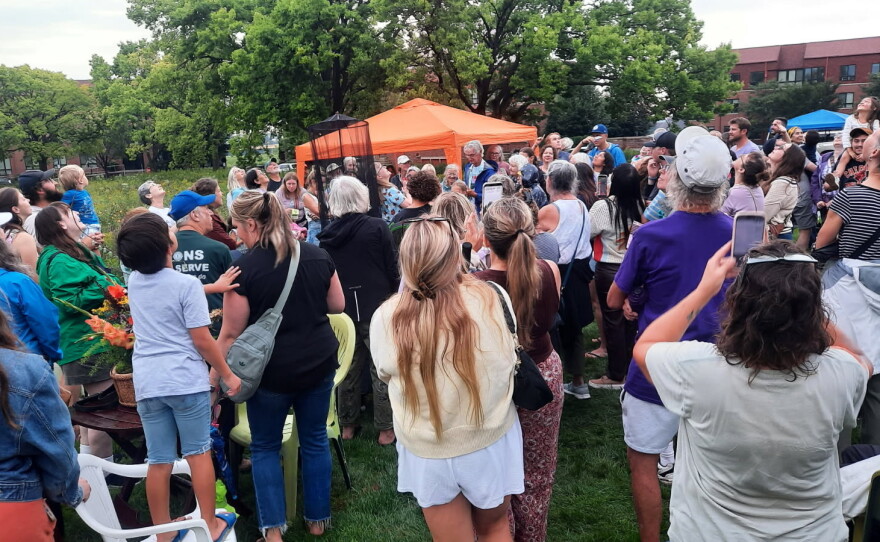
Recently, the group held its 16th celebration of the butterflies’ migration.
Wauwatosa resident and Friends of the Monarch Trail founder Barb Agnew says it all started when she came upon a sycamore tree here.

“We first met in 1997 or so, and it was just a beautiful sycamore tree, which I had always been fond of because of the unique bark. But every September, I would see the monarchs landing. I'd come here after work and just watch as they came in one by one and landed in this tree,” Agnew says.
Agnew began bringing people to witness the wonder.
“People I knew, friends, and some of the dog walkers that used to come through, they'd walk through the public gardens. And it was, you know, 'how did I walk past this all these years?'” Agnew recalls.
She says people "had no idea that [butterfly migration] happened here every year in August and September."
The migration has gotten later in recent years, Agnew says, with monarchs roosting the park as late as October.
“Migrating creatures, birds and butterflies follow water, rivers, because that's a lot of times where the resources are for nectaring. And this being the highest elevation in Wauwatosa, they stop here so that they can rest for the night. They use the sycamore for shelter. It's got the canopy. It's got ambient heat. It has a windbreak surrounding it, and it's someplace where they can nectar a lot,” Agnew says.
Froedtert Hospital, the children’s hospital and other medical buildings used to operate south of the habitat area.
Agnew says what were known as the Eschweiler buildings sat on another part of the Milwaukee County Grounds, but aside from that, the land was open.
“1911 is when they opened the historic Eschweiler buildings, and I think probably this tree was planted behind one of those buildings,” Agnew says.

In 2008, the Friends of the Monarch Trail launched, “And we spent many evenings and days at meetings making sure that we could keep the important parts of all of this [park],” Agnew says.
Agnew was part of a team that delineated what was most important to save.
“The parks department lead designer at the time, myself, Sue Borkin of the [Milwaukee Public] Museum of butterfly fame, and Jim Reinartz of UWM [Field Station]. That became the habitat or the conservancy at that time, which is still here,” Agnew says.
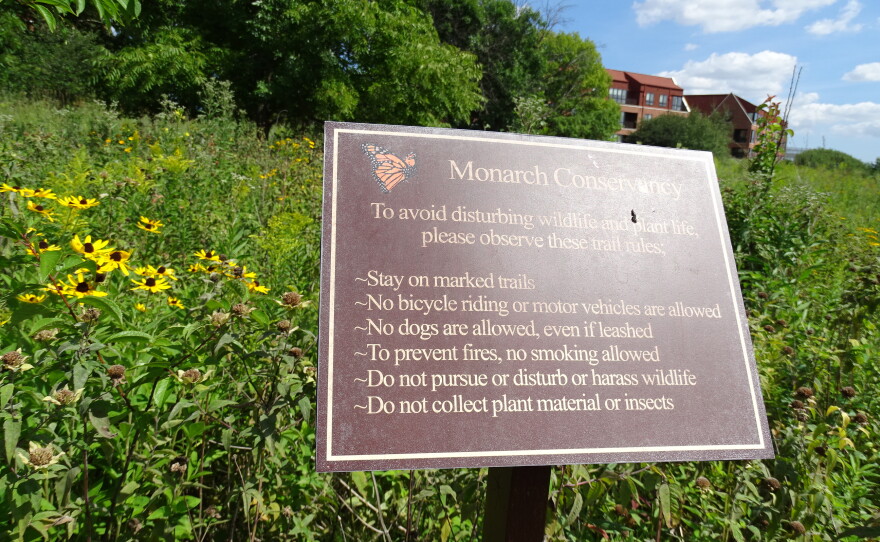
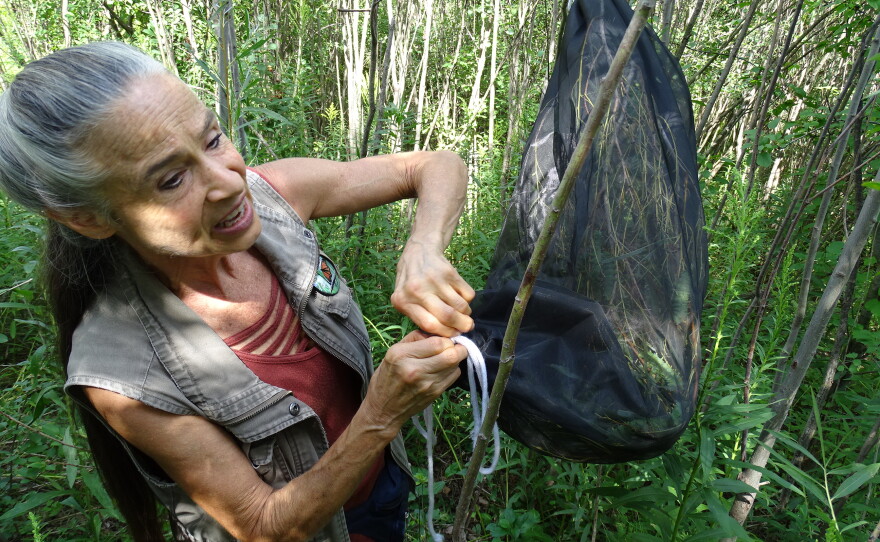
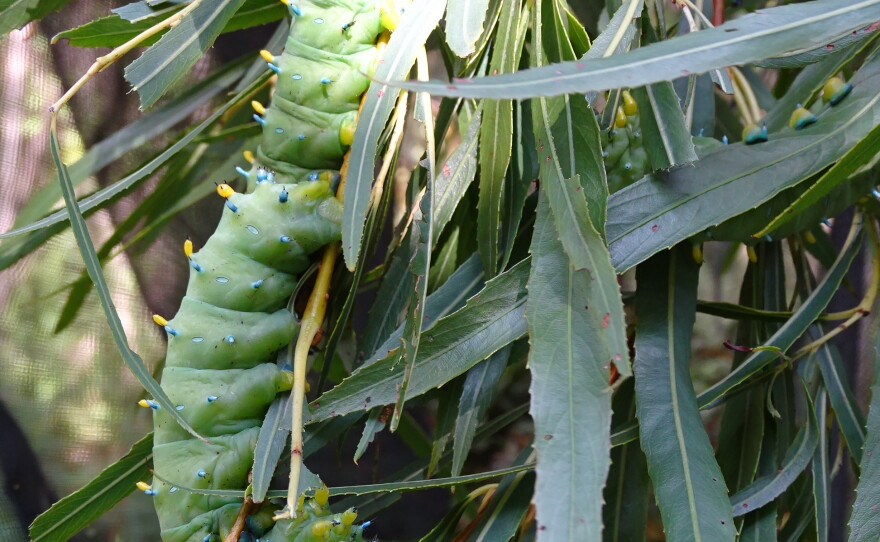
Eleven acres have been protected in one section of the park. To the west, beyond a series of apartments and corporate offices, the Friends of the Monarch Trail are stewarding 11 additional acres. The Department of Transportation owns the parcel and allows the group to restore it.


She points to a native plants just east of the sycamore.
“Last year, we planted this whole section, and it was buckthorn and nothing else, and it is now perfect for migrating monarchs. The diversity is beautiful,” Agnew says. “I want people to come out and look and feel what they're seeing.”
The Friends of the Monarch Trail's migration celebration took place Saturday, Aug. 29 from 4 to 7 p.m.
_