

Universities of Wisconsin
/
ASAP video series
Universities of Wisconsin roll out video series on artificial intelligence and how to use it in 2026. How to get better AI responses and when to use AI are main themes.

Nobody owns us but you … our listeners, our supporters, and the community we serve.
-
 Manfred Olson Planetarium/UW-MilwaukeeYou can catch "Arabian Nights" at Manfred Olson Planetarium — Fridays this April.
 -
 Owen Ziliak/Wisconsin State Journal via APThe president of the 25-campus Universities of Wisconsin has said in a letter obtained by The Associated Press that he’s been told to resign or he will be fired. UW President Jay Rothman says in the letter to the head of the Board of Regents that he won’t step aside from the 165,000-student system.
 -
 U.S. ArmyDeedra Irwin discusses her experience competing in the 2026 Milano Cortina Winter Olympics in Italy.
 -
 Joy Powers/WUWMWith grocery prices on the rise, WUWM's Dig In! Contributor Venice Williams shares tips on starting a garden.


How to vote, who the candidates are and what's at stake.

Join us at the Community Development Alliance Homeownership Lab on April 27.

Swing State of the Union
Swing State is back with some bonus episodes. We’ll investigate two broad questions about our state courts: How do we hold judges accountable, and how do different justices interpret Wisconsin’s constitution?

Rising Forward: Stories of Change
Hosted by Shannon Sims, this podcast goes behind the headlines to explore the social entrepreneurs transforming Milwaukee and beyond. Shannon leverages her networks, resources and journalistic curiosity to uncover the stories of innovative changemakers who are building businesses that solve pressing community challenges.

Seeking Solutions: Keys to Homeownership
This WUWM series digs into systemic housing problems in Milwaukee and sheds light on solutions.


Here's how to find WUWM stories and podcasts on NPR.org and the NPR app.
-
 Ryan Faurie is the owner of Handmade MKE, based in Greendale, Wisconsin. She shares how the economy is impacting her right now and how she’s preparing for the future.
 -
 As outside investors buy up Milwaukee’s housing supply and turn it into rentals, one nonprofit uses a comprehensive approach to steadily combat that.
 -
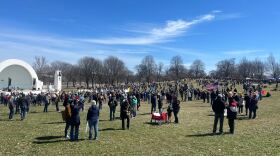 On March 28, protesters gathered across the state to speak out against President Donald Trump's administration and policies.


-
 The GV80 Coupe is a spinoff of Genesis’s near perfect 3-row GV80 SUV. As with its cousin, its power is delivered smoothly and with little drama.
 -
 Wisconsin’s seeing more saunas pop up, but heat bathing has been part of Upper Midwest culture for over a century. It’s largely thanks to the Finnish immigrants who settled along Lake Superior.
 -
 A bronze statue of an immigrant mother with two children has stood in Milwaukee’s Cathedral Square since 1960. One of our Bubbler Talk listeners wanted to know more.
 -
 Western Wisconsin is filled with small, slow-paced towns where neighbors know each other. But as continued ICE operations in the Twin Cities spill over across the border, they’ve also become a target.
 -


Your connection to the community. Lake Effect brings you local conversations about the people, places and organizations that shape Milwaukee.
