Car companies, or more accurately their marketing arms, love to loosely tie the image created by a vehicle’s name to its driving characteristics or overall image.
Thus, we’ve had the agile wild child Ford Mustang, the devilishly fast Lamborghini Diablo, and the stout, boxy Land Rover Defender, not to exclude the former Volkswagen Beetle or Ford’s carry-alls the Explorer and Expedition.
So, Hyundai’s Palisade may rightly be considered a fortification of sorts, a protector of the family, but one of metal, plastics and composites, not wooden stakes as in palisades that Daniel Boone might recognize.

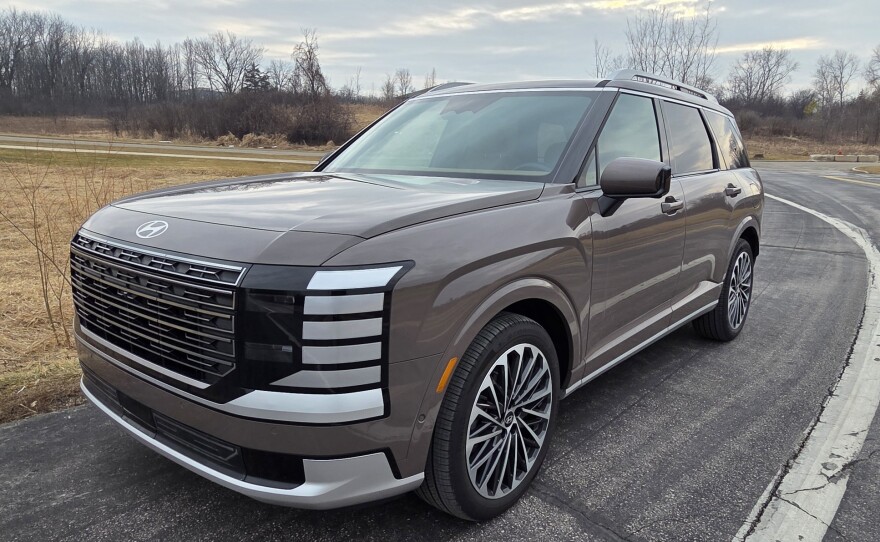


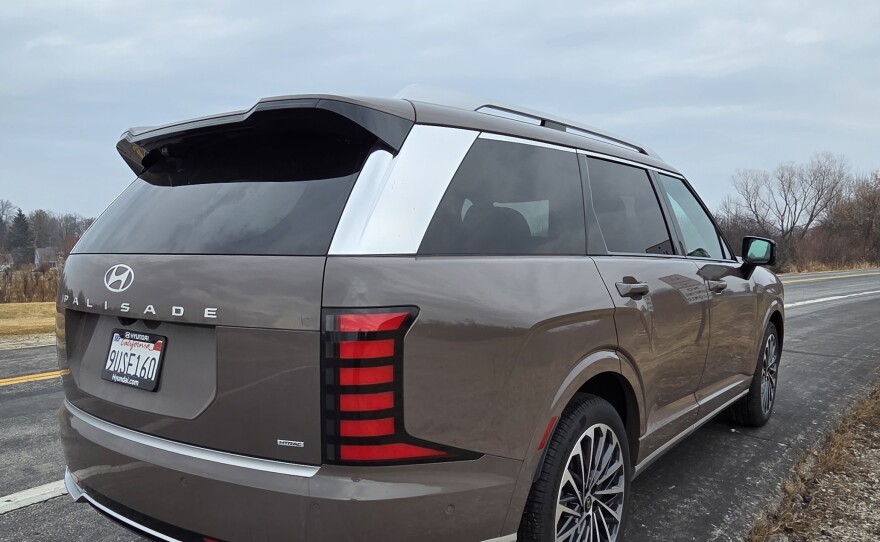

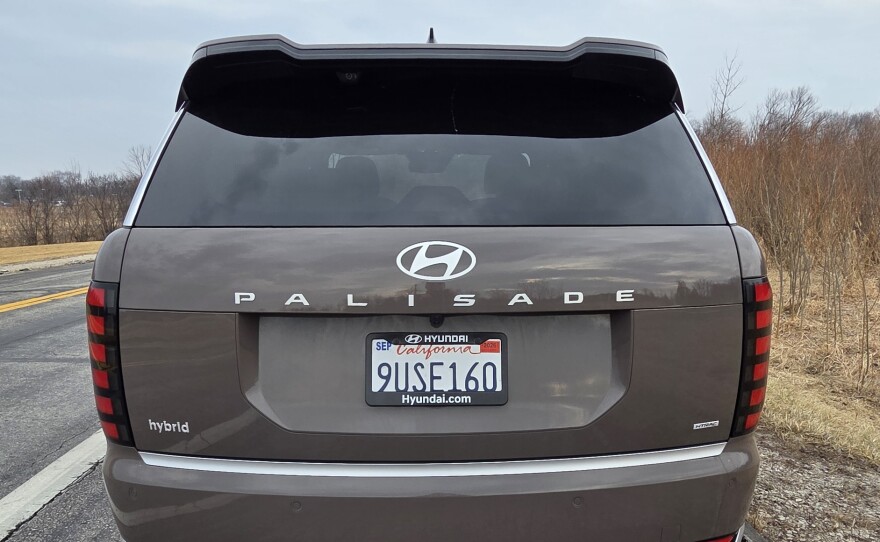
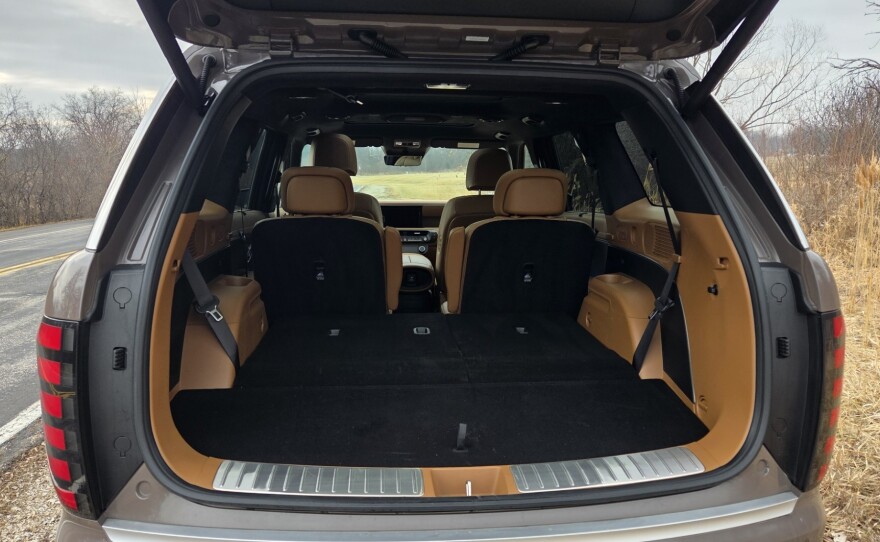
This 3-row SUV will surround and defend a family against most anything a modern roadway, or off-roadway, tosses at it. Bumps will be smoothed, electronic gadgets will be charged, the driver will be massaged, luggage will be hauled, and sloppy roads will be tamed.
I’d be hard-pressed to think of anything I, or my extended family, could want that the redesigned 2026 Palisade does not offer.
Now in its seventh model year, the Palisade has been restyled to further compliment Hyundai’s futuristic leaning yet boxy design themes with head and taillights that stand out from competitors. And while the profile is big SUV, the look is refined, sophisticated, and classy now with forward-leaning D-pillars in back along with satin chrome trim accents.
More importantly, I suppose, the side windows are larger for better rear passenger visibility and a skosh more room in the rear seat and cargo areas as overall length is up three inches to 199.4 while the wheelbase grew 2.5 inches.
Most important IMHO is the addition, finally, of a hybrid power system to increase horsepower and improve gas mileage. One can argue, and many will, that with gas prices down a vehicle’s mpg numbers may not matter so much. But one would be wrong in that gas prices flex like politicians’ opinions, so will rise again.
I managed 26.2 mpg in this nearly 5,000-pound SUV, a pretty amazing number. I had achieved 23.9 mpg in my previous drive of the V6-powered Palisade. That, too, was ahead of the segment’s average. This new 2.5-liter turbo I4 hybrid in AWD trim is rated 29 mpg city and 30 highway, while a front-drive model is rated 31/33. An even more efficient FWD Blue trim earns a 33/35 rating.
For the record, the V6-powered Palisade, which is still offered, is rated 19 and 25 mpg.
Folks more concerned with power than mpg will be happy to know they get the better of both with Hyundai’s new hybrid. Its powerplant delivers 329 horsepower vs. 287 for the V6. Both deliver 260 pound-feet of torque.
Power is smoothly delivered in the tested AWD Calligraphy edition via a 6-speed automatic. Three drive modes are available via a dashboard toggle, with Sport aiding oomph.
Ride is pleasant, making this and Toyota’s Grand Highlander the leaders in overall comfort for mainstream 3-row SUVs. Handling also is easy, making Palisade simple to park in crowded lots, despite its size. AWD provides good traction on sloppy roads too, but for those living in drier climates a front-drive model is available and costs $2 grand less.


Note that Kia’s Telluride is a kissin’ cousin to Palisade, so delivers much the same performance.
For the record the hybrid Palisade will tow 4,000 pounds. That’s 1,000 pounds less than the V6-powered unit.
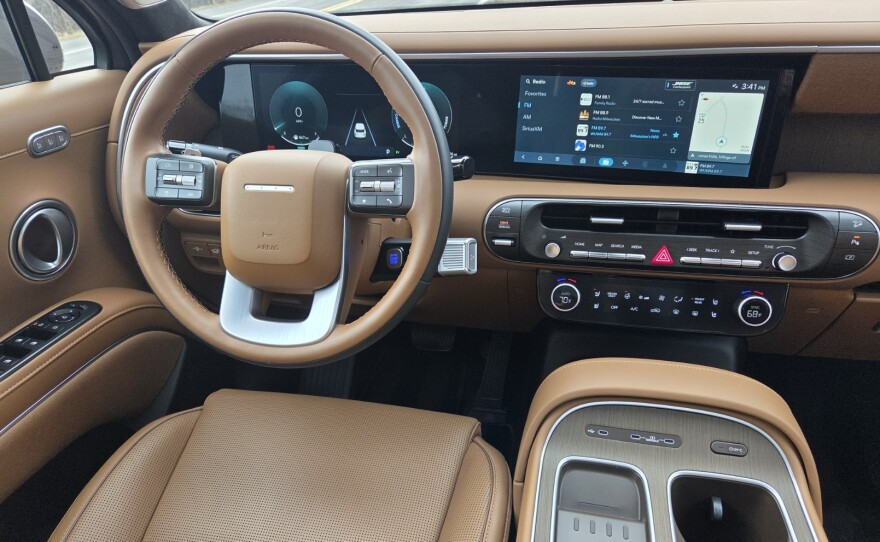
My Cast Iron Brown Pearl (milk chocolate brown) looked great outside, but its interior earned it more wow-factor from passengers than many vehicles I’ve tested.
Seats were a rich butterscotch (my take) orangish brown Nappa leather that was accented by fake wood inserts in the dash and atop the console, plus a similar color fabric trimmed the dash. Doors included satin chrome round door releases while door control panels were a gunmetal shade with satin chrome toggles. There’s a rounded theme to all trim panels.
Everything looks and feels like it was designed for an upscale SUV, which this now borderlines.
Overhead are two sunroofs, the front will open and includes a manual sunshade, while the rear is a glass panel with power shade.
Dash layout is modern and convenient. Everything looks and works intuitively, no guesswork for what does what here, including the two large integrated digital screens, one for the driver-centric readouts and the other the info touchscreen. Large dual climate temperature knobs make adjusting air temp easy. Haptic controls for the rest are best handled with a gloveless hand.
Seats are well-shaped and comfy with multiple power adjustments for the heated and cooled front seats. Power buttons will extend the lower cushion and tighten the back’s side bolsters. Warning though, those are pretty snug to begin with. Larger drivers may find them a tad restrictive.
There are two memory buttons for the driver’s seat on the door panel, and a welcome surprise, a massaging function controlled there too. Press once for bottom massage and twice for back Rolfing.
For further relaxation consider that Palisade’s interior is luxury ute quiet (some tiny hybrid whine at low speeds), plus the Calligraphy model includes a 14-speaker Bose sound system and heated leather-wrapped steering wheel.
Palisade’s console is large, but open below the front for storage and includes a convenient wireless phone charger, right where it’s wanted, next to the driver.
Second row seats also are heated and this model featured captain’s chairs in row two, allowing Palisade to carry seven passengers. Opt for a model with a second row bench and Palisade carries eight.
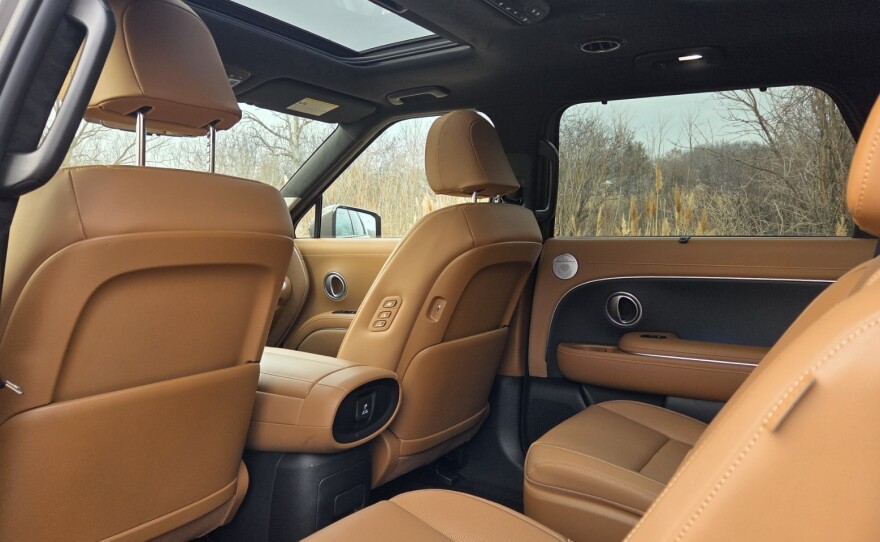

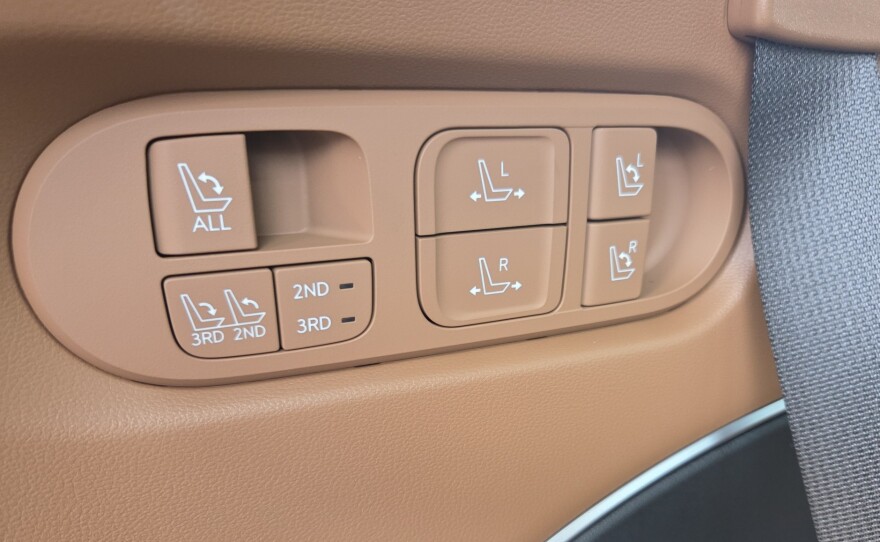
Hyundai’s third row is useful for adults too as there’s the ability to power row two seats forward to increase legroom in back. That helps knee room, but a button atop the seat back and one along its side allow the row two seats to power forward for easier loading too.
There’s a power hatch in back and power third-row seat-lowering buttons inside the cargo area to make for simple cargo loading too.
Gotta mention the plethora of USB ports in Palisade. These are 100-watt USB-C ports, so offer faster charging than most standard vehicle ports.
Warranties are another Hyundai positive. The powertrain is covered by a 10-year, 100,000-mile warranty and the basic warranty is a 5-year, 60,000-mile pact.
Surely (don’t call me Shirley) there’s a downside. Well, not much of one.
The shift lever is located on the right side of the tilt/telescope steering column. That’s not unusual as these have been making a comeback to free up console space for chargers, etc. But the ignition button is hidden near the base of that stalk and invisible if the steering wheel is straight as one of its stalks hides the ignition/shifter stalk. Once you know its whereabouts you’ll find it easily, but for a new driver it can be a frustrating find.
Pricing begins at a reasonable $45,760 for a front-drive Blue SEL model and expands from there to the tested Calligraphy’s $60,380 including AWD and delivery fees. There are five other trims with models labeled Blue being the most fuel-efficient. The SEL model also can accommodate 8 passengers and lists at $47,760.
Palisade is made in South Korea, so may or may not be impacted by our on-and-off tariffs.
Hybrid competitors include the aforementioned Kia Telluride and Toyota Grand Highlander, plus Mazda’s handsome CX-90.
FAST STATS: 2026 Hyundai Palisade Hybrid Calligraphy AWD
Hits: Stylish 3-row SUV, better power than gas-only, better MPG, excellent ride, good handling, AWD + 3 drive modes. Extremely quiet interior and loaded with Bose stereo, superior center stack/console design, big screens, heated steering wheel, heated/cooled front seats, heated second row seats, turn-signal cameras, power hatch, two sunroofs, useful third row seats power down, easy access wireless charger. Power forward row two seats. Lots of USB ports. Excellent warranties.
Misses: Not much, but ignition button on column-mounted shifter can be hidden by steering wheel stalks. Driver’s seatback bolsters can be tight for larger people.
Made in: Ulsan, So. Korea
Engine: 2.5-liter turbo I4 hybrid, 329 hp/260 torque
Transmission: 6-speed automatic
Weight: 4,652 lbs.
Wheelbase: 116.9 in.
Length: 199.4 in.
Cargo: 19.1-46.3-86.7 cu.ft.
Tow: 4,000 lbs.
MPG: 29/30
MPG: 26.2 (tested)
Base Price: $60380 (includes delivery)
Invoice: $58,381
Option: Carpeted floor mats, $245
Test vehicle: $60,625
Sources: Hyundai, www.kbb.com