

Leszek Lata
/
Stock Adobe
Less than two months ago, both the Milwaukee Police and Milwaukee County Sheriff were either using or exploring facial recognition technology to help with investigations. WUWM traces how community pushback led to both departments halting use of FRT.

Nobody owns us but you … our listeners, our supporters, and the community we serve.
-
 U.S. ArmyDeedra Irwin discusses her experience competing in the 2026 Milano Cortina Winter Olympics in Italy.
 -
 Joy Powers/WUWMWith grocery prices on the rise, WUWM's Dig In! Contributor Venice Williams shares tips on starting a garden.
 -
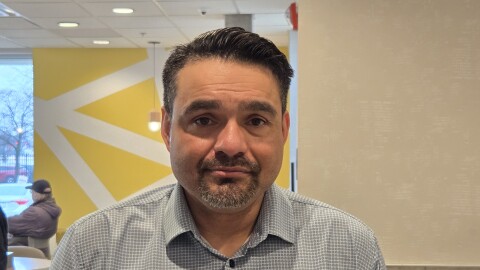 Maayan SilverGeorge Kolintzas Jr. has found a new job and living arrangement, and he fills us in on how he’s feeling now, both about the economy and politics.
 -
 VantagePort Washington voters on April 7 will decide whether they can stop city officials from approving large tax incremental financing districts in future elections.


How to vote, who the candidates are and what's at stake.

Join us at the Community Development Alliance Homeownership Lab on April 27.

Swing State of the Union
Swing State is back with some bonus episodes. We’ll investigate two broad questions about our state courts: How do we hold judges accountable, and how do different justices interpret Wisconsin’s constitution?

Rising Forward: Stories of Change
Hosted by Shannon Sims, this podcast goes behind the headlines to explore the social entrepreneurs transforming Milwaukee and beyond. Shannon leverages her networks, resources and journalistic curiosity to uncover the stories of innovative changemakers who are building businesses that solve pressing community challenges.

Seeking Solutions: Keys to Homeownership
This WUWM series digs into systemic housing problems in Milwaukee and sheds light on solutions.


Here's how to find WUWM stories and podcasts on NPR.org and the NPR app.
-
 Four years ago, I tested one and except for a few minor tweaks and the ever-present sticker price creep, it remains the same.
 -
 Public commemorations to Latino civil rights leader Cesar Chavez are coming down nationwide amid sexual abuse allegations against him.
 -
 Susan Fete co-founded Renaissance Theaterworks in 1993. She will retire this spring after directing a production of "Barefoot in the Park," which runs through April 12.


-
 There is perhaps no food item more American, or whose origins are more full of more lore.
 -
 Grant County officials in southwestern Wisconsin aren’t divulging the developer interested in a $1 billion data center in the town of Cassville.
 -
 Matt Wild from Milwaukee Record recaps his favorite new songs from local musicians this month.
 -
 For Black History Month, Milwaukee Film's Ty Williams has handpicked a variety of Afrofuturist films that reflect on and celebrate Black icons in fiction.
 -
 Pros and cons continue to swirl around data centers — some in the planning stages, others already in motion in Wisconsin. A We Energies proposal is adding fuel to the fire. It would create a new energy rate for so-called “very large” customers, like data centers.


Your connection to the community. Lake Effect brings you local conversations about the people, places and organizations that shape Milwaukee.
