Imagine for a moment that you’re a parent looking for a teen, or soon-to-be college student’s first car. Or imagine you’re a recent college grad or young family looking for dependable new wheels.
Picturing a Toyota Corolla? It’s likely among shoppers’ first thoughts, and there’s a reason for that. Corolla has been around since 1966, so 60 years now and its reputation for reliability, practicality, and dare I say it, affordability is legend.

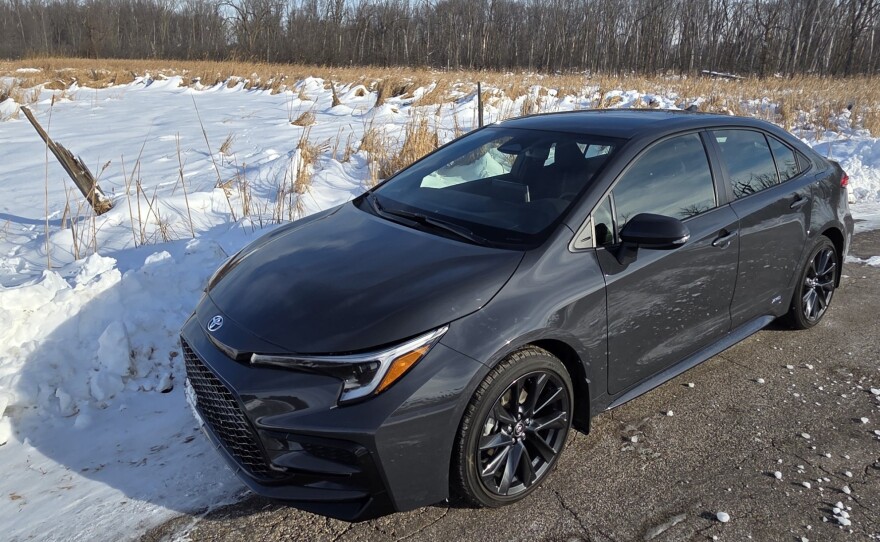

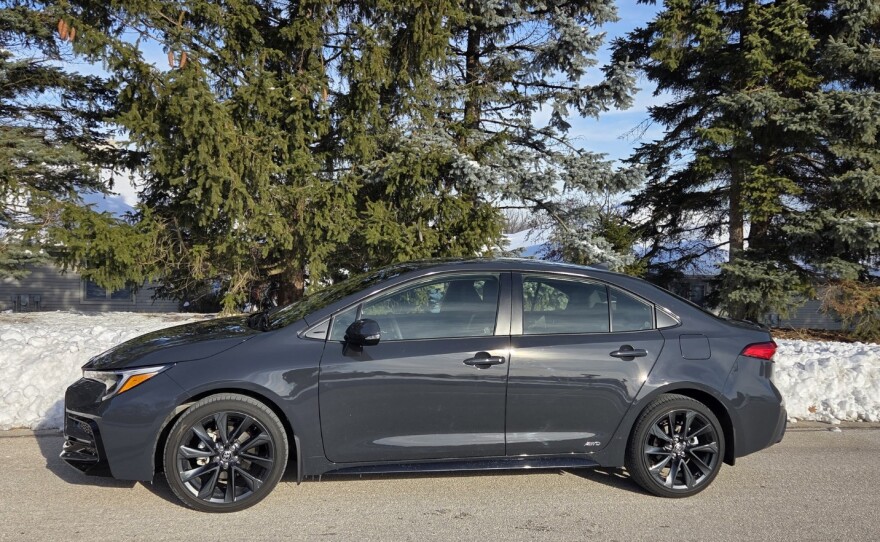
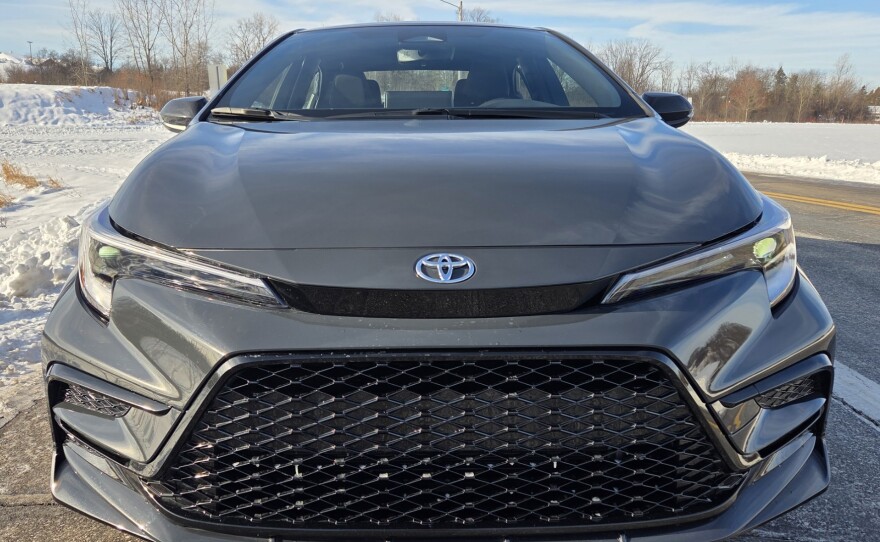
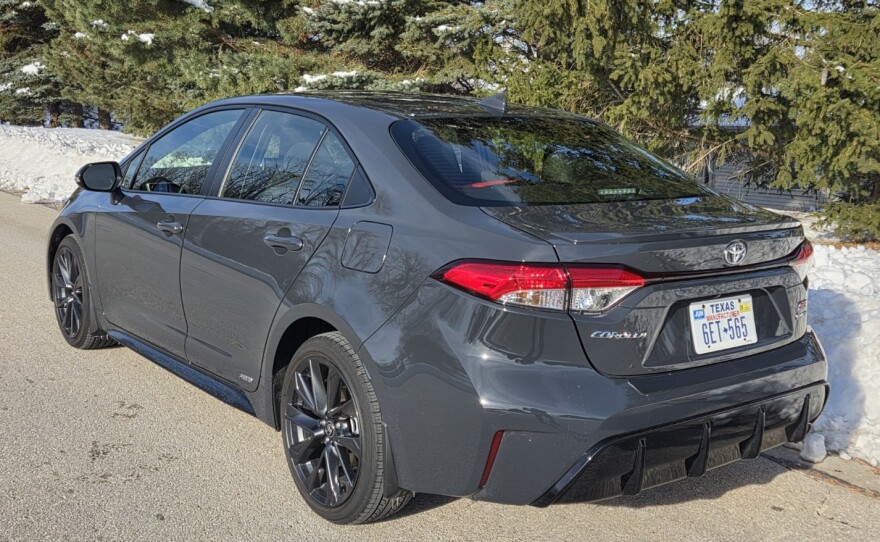

Corolla, meaning little crown in Latin, is the all-time best-selling model in the world, and that’s a pretty big place. More than 50 million Corollas have been sold, including 232,908 in the United States in 2024. That’s mega!
Corolla’s reputation has been built over those 60 years by being stout, as in it’ll last 200,000+ miles if cared for, and likely will be passed down from parents to kids (sometimes multiple kids) or their friends needing cheap wheels once it’s already well used.
This week’s drive is all that, but as handsome and inexpensive as this Corolla sedan is, it now has two standout features that could broaden (is that possible?) its appeal.
The tested Corolla SE is both a gas-sipping hybrid and now includes AWD, making it a perfect fit for northern climes. Corolla is a tailored fit too for nearly every new car budget and dodges the extra cost of being a crossover or SUV, while still delivering stellar winter traction.
A base Corolla LE with AWD lists at $27,170, the tested mid-level SE at $29,610, and going luxury with the XLE is still just $30,135. Front-wheel-drive models are available too, each costing $1,400 less.
All are young family or new driver sedans, so are practical, not performance beasts.
That means coupling Toyota’s 30 years worth of hybrid technology with an already miserly 1.8-liter I4 engine delivers a modest 138 horsepower and just 105 pound-feet of torque. That sounds puny, but the compact sedan weighs just over 3,200 pounds and feels solid at that.
Power is modest, but sufficient. Getting on the freeway it’s best to toggle the 3-choice drive mode on the console up to Sport. That boosts the engine’s revs and the gearing settings in the electronic continuously variable transmission aids acceleration. Expect no neck strains.
City driving is fine in either Eco or Normal mode, the latter giving slightly better acceleration away from stops. I used this mostly but did drive about a third of the time in Eco and never had an impatient driver honk for me to hustle.
The good news with a hybrid is gas mileage, again keeping the operation of a Corolla high on affordability. I managed 42.4 mpg while the EPA rates this at 47 mpg city and 41 mpg highway. All hybrids excel at city gas mileage.
Couple the hybrid power with AWD and traction is good in the wet or slush. No, you won’t take this sedan off road, but then very few folks take even the largest SUVs off road either. No, AWD, as with many crossovers and all Subarus is for on-road traction and safety.
Handling is light and easy in Corolla, so a breeze to drive in town or on the freeway. And it’s a joy to park in lots or parallel on crowded city streets.
Ride is good too as Corolla is set on a 106.3-inch wheelbase and that’s usually about the length when vehicles start to smooth out our crumbling streets.
The only performance downside is some road noise from below and engine growl when heavily accelerating. Around town the road noise is not an issue, but on the highway you’ll want to crank up the radio. One may also notice the hybrid’s whine as the car coasts or brakes at low speeds. That’s the price of doing business with a hybrid, and full on EVs.
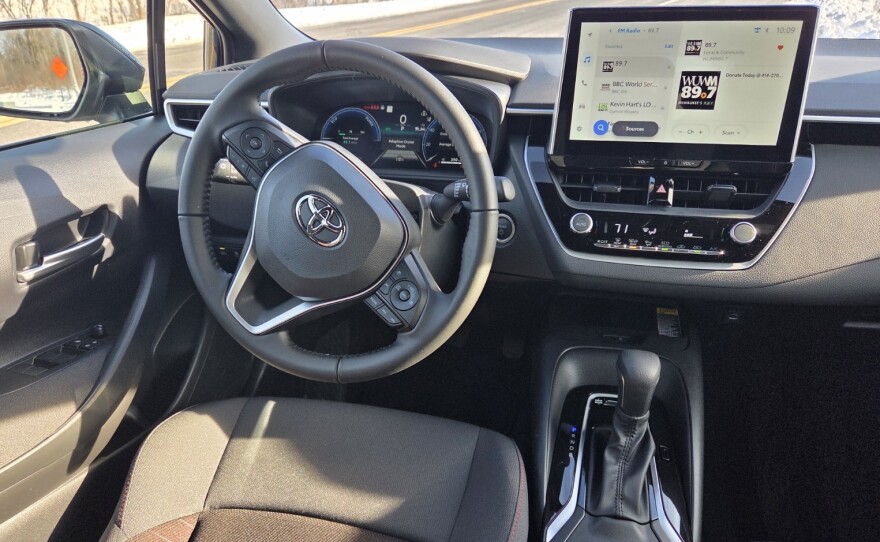
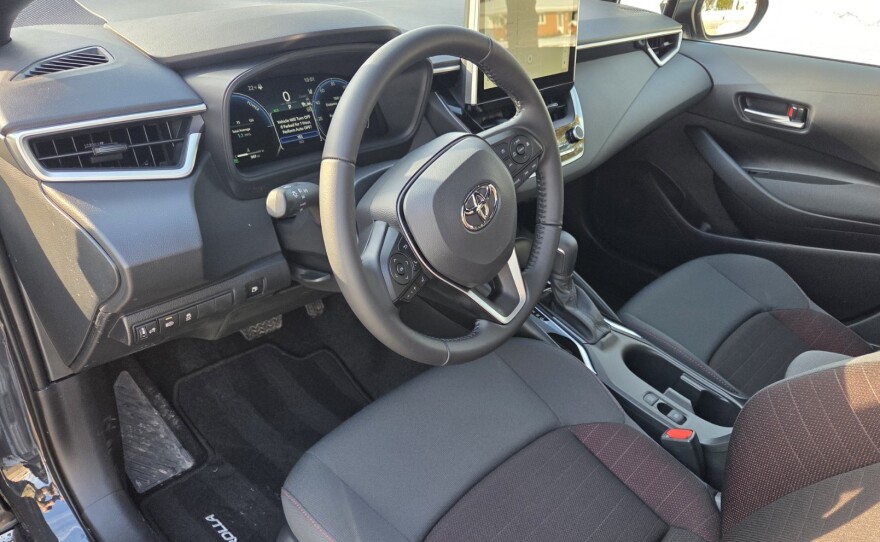
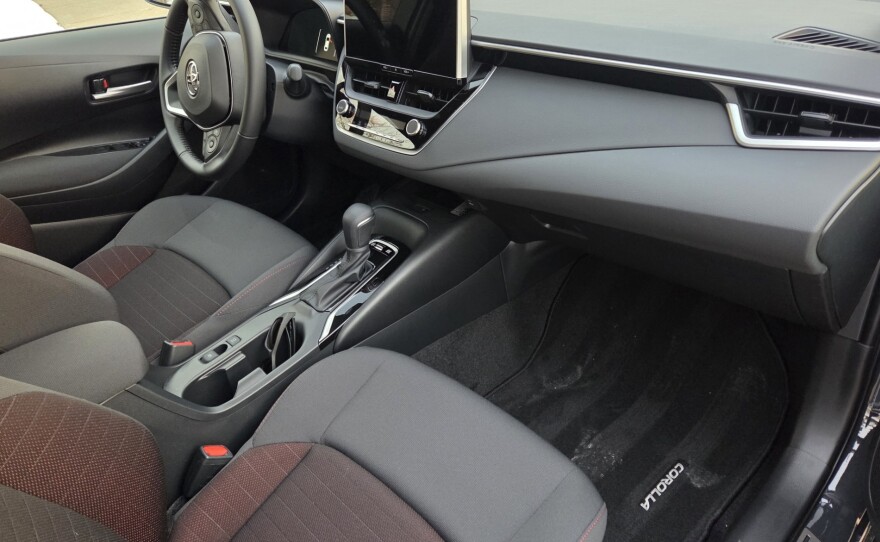
Inside, the SE trim comes with cloth seats, these being black with inserts of a subtle black and red design, plus red stitching around the seats for a youthful feel. Door armrests are the same black cloth while the dash and door tops are textured soft-touch plastic. Dash air vents are chrome and the area surrounding the console-mounted shifter a gloss black.
The test car added a Premium package for $965 that boosted the digital instrument cluster to 12.3 inches and the info screen to 10.5 inches plus upped audio system speakers to six from four. Also included is a wireless phone charger below the dash’s center, a bit of a reach, but good to have.
Toyota’s touchscreen is easy to use while driving and there are two large climate control knobs below that for temperature and fan adjustments. However, the other climate directionals are tiny buttons. Plus there are no heated seats or steering wheel here and apparently neither are options on the SE trim. One must bump up to the XLE before those are available.
Seats though are well-formed and comfy while being manually adjusted. There’s a pump handle on the side to boost the driver’s seat height. Short folks will like that but may wish for a flat-bottomed steering wheel to provide more knee space when entering and exiting. Such a wheel is not optional here either.
Overhead are expandable sun visors, much needed in winter driving, but no sunroof. Again, this car’s goal is practicality, not luxury.
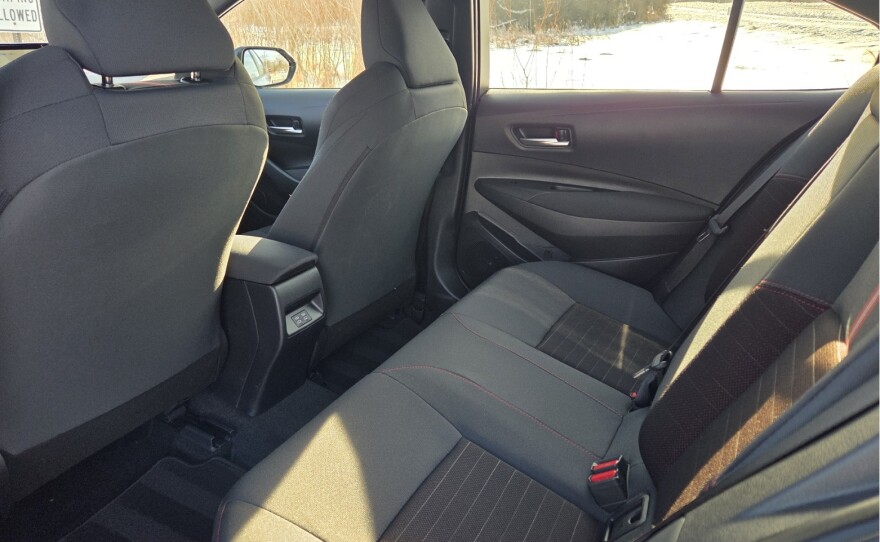
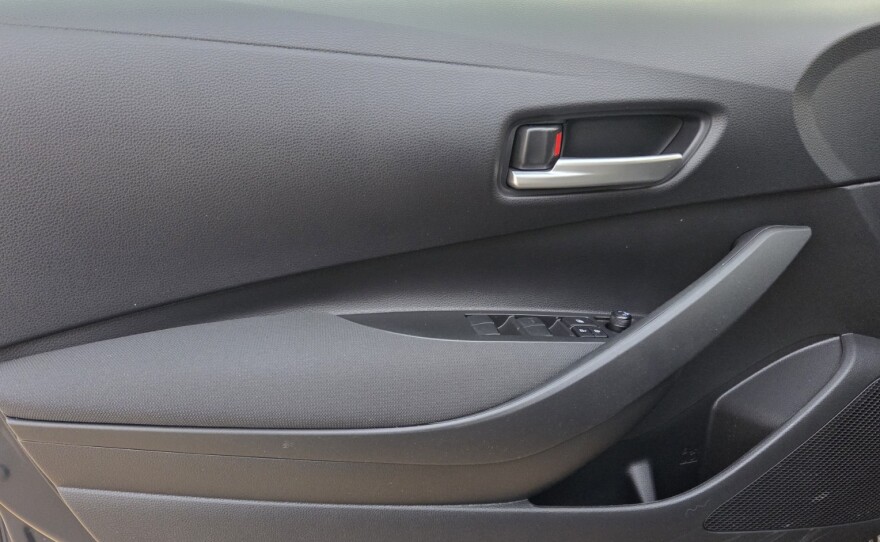
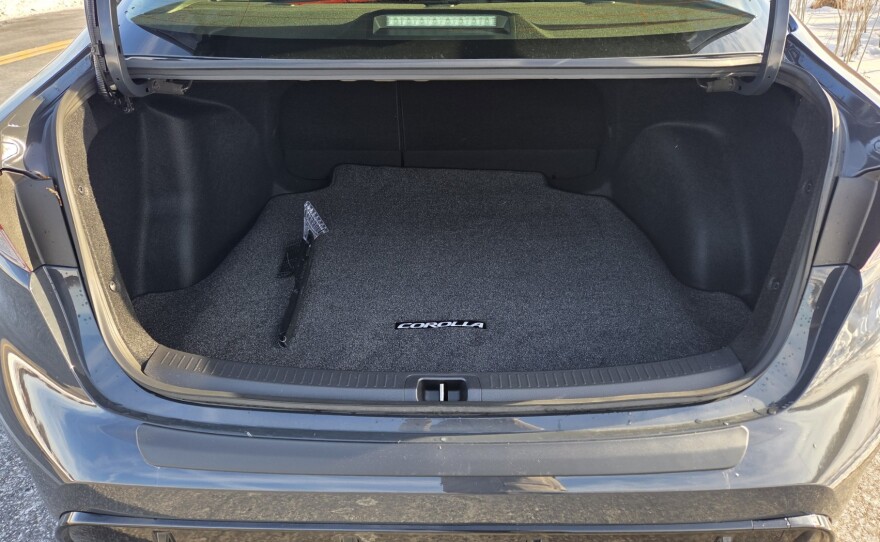
Corolla will carry four average size adults with ease and includes a decent-sized trunk with a power release on the key fob. Toyota continues with an interior fuel filler door release, but wisely puts it on the dash’s left side instead of the floor, so easy to locate.
For a low-end practical car, you might be surprised at the standard safety equipment. Start with Safety Sense 3.0 that includes pre-collision warning, rear cross-traffic alert, and now adds blind-spot warning. Adaptive cruise control is here too and there’s good side viewing with visual space between the A-pillar and rearview mirrors.
Note that Corolla earns a 5-star safety rating from the National Highway Traffic Safety Administration.
The test car added a variety of low-cost options from door and door sill protectors to a frameless HomeLink-equipped mirror. Those along with that Premium package brought the final cost to $31,677. That’s still a bargain in today’s market where $50k is the average going rate.
If your budget allows, moving up to the XLE trim brings a power sunroof, SofTex (fake leather) seats and the much appreciated heated front seats, but not steering wheel.
Made in Japan, the hybrid could be impacted by tariffs, so be aware. Also, note that the front-wheel-drive hybrid models get considerably better fuel economy at an EPA rated 53 mpg city and 46 highway. So, if cost is your major consideration, that would aid weekly and monthly budgets.
Gas-only Corollas also are available still. Plus Toyota’s slick Prius hatchback is a stylish hybrid to consider.
Finally, why is Corolla called Corolla. As mentioned above it means little crown in Latin and when introduced in 1966 it was a subcompact following on the heels of Toyota’s bigger sedan, the Crown. With apologies to the late broadcaster Paul Harvey … now you know the rest of the story.
FAST Stats: 2026 Toyota Corolla SE AWD Hybrid
Hits: Stellar MPG, easy handling, decent Sport Mode power boost, comfy sedan for four. Good standard safety features with adaptive cruise, easy 10.5-inch info touchscreen, 2 big climate control knobs, comfy seats, expandable visors, good side views.
Misses: Mild acceleration unless in Sport mode, some road noise and engine groan, small buttons below info screen, no heated seats or wheel, no sunroof.
Made in: Aichi, Japan
Engine: 1.8-liter Dual VVT I4, hybrid, 138 hp/105 torque
Transmission: ECVT automatic
Weight: 3,250 lbs.
Wheelbase: 106.3 in.
Length: 182.3 in.
Cargo: 13.1 cu.ft.
MPG: 47/41
MPG: 42.4 (tested)
Base Price: $29,610 (includes delivery)
Invoice: $27,504
Major Options:
SE Premium pkg. (10.5-in. audio/media w/6 speakers, 12.3-in. digital gauge cluster, wireless charger), $965
Door edge guards, $165
Door sill protectors, $179
Mudguards, $160
Trunk LED light, $25
Rear bumper protection, $89
Frameless HomeLink mirror, $175
Carpet mat pkg., $309
Test vehicle: $31,677
Sources: Toyota, www.kbb.com