Compact SUVs and crossovers are mostly known for their economy and practicality, not much sport in these Sport Utility Vehicles.
There are exceptions to be sure, Mazda’s CX lineups offer turbocharging options and responsive handling, and the Alfa Romeo Tonale tested a few weeks back had pep in its step.
Now Volkswagen comes to the power party with a juiced-up version of its handsome Tiguan, but just in the new tippy top SEL R-Line Turbo trim. Horsepower jumps from the base turbo 2.0-liter’s 201 horses up to 268 and torque bumps from 236 to 258.


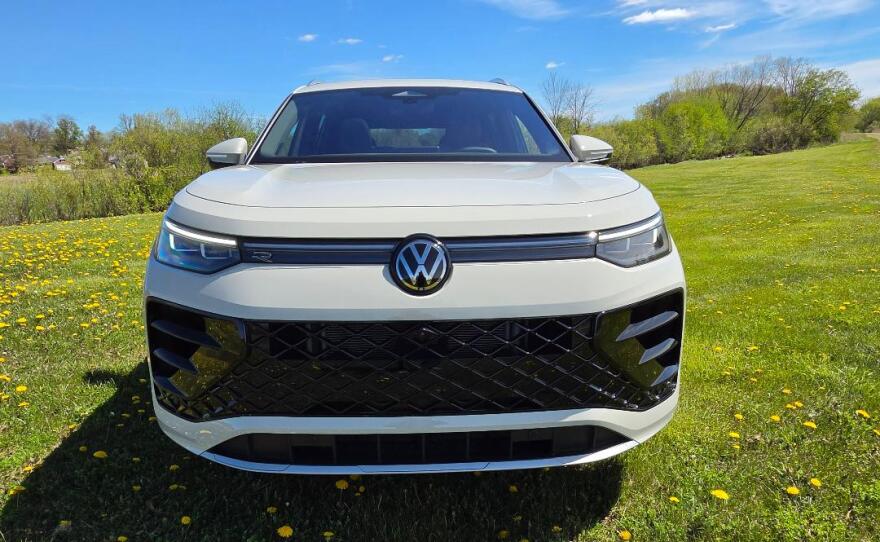


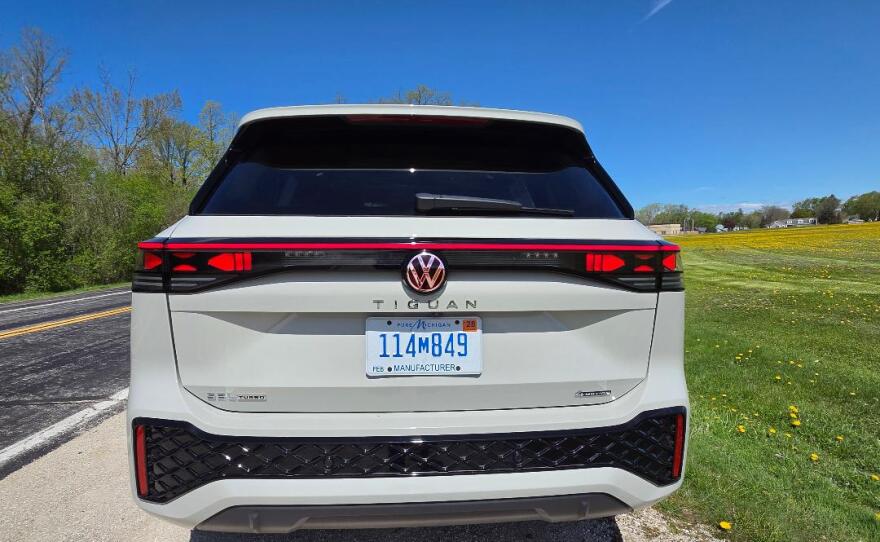

Power is not an issue with this new performance model. It’ll rock, but there remains some hesitation on acceleration, as I’d experienced in earlier models. Feels like turbo drawl as the 8-speed automatic transmission isn’t the culprit. It seems to shift fairly smoothly.
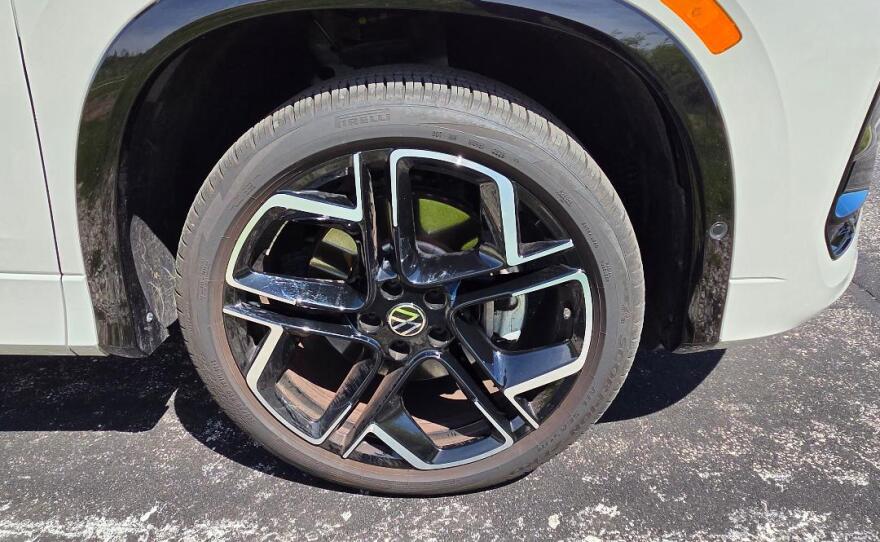
Tiguan also packages that power with nimble handling, something it’s always featured to make it a bit more fun to push on curvaceous roads. Here it features struts up front with lower control arms and long-travel coil springs while the rear has a four-link system designed to help more when off-roading. The VW is shod in Pirelli Scorpion Zero 20-inch tires that provide good grip and are backed up with VW’s 4Motion AWD system.
While this Tiguan, redesigned for 2025, is 170 pounds lighter (no third-row seat, aluminum suspension and hot-formed steel body) than previous models the ride can still be overly firm at times. Around town it’s pleasant enough, but on uneven roads where cracks and potholes are prevalent one feels the road a bit more than one might wish.
Vented disc brakes all around give Tiguan good stopping power too, with this SEL R-Line Turbo getting larger 12.2-inch discs in the rear.
While one knows a small SUV is not a racer, the pep, handling and braking power in Tiguan feels like it could excel on an autocross course. Not your parents SUV.


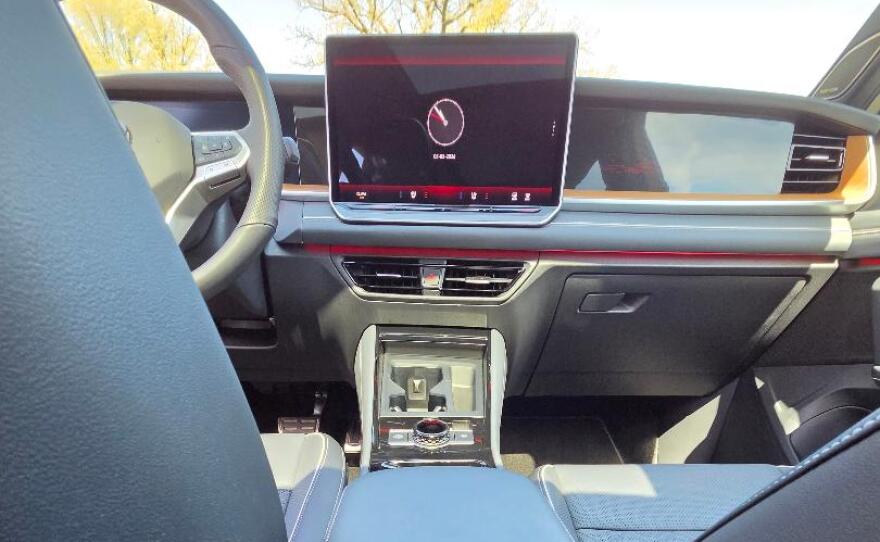
Inside VW has upped its interior design and materials game too.
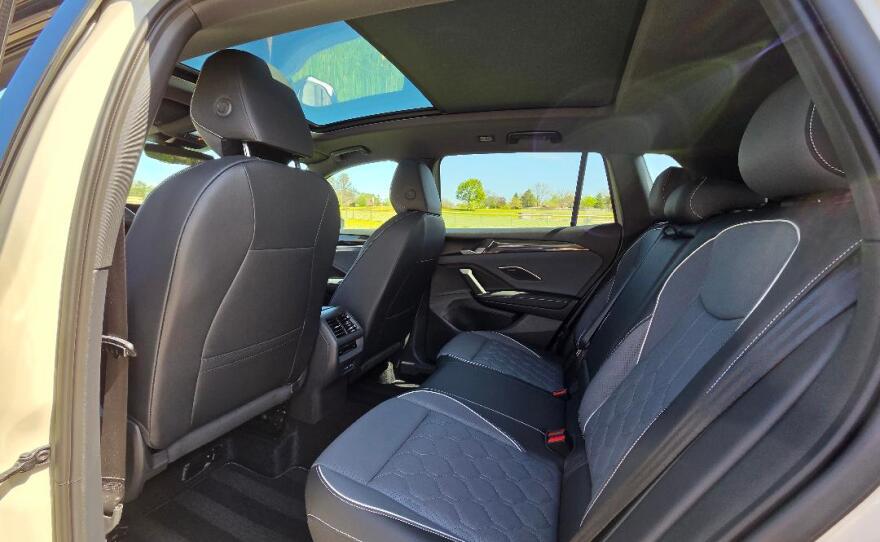
The Sandstone (a tan to gray off-white depending on lighting) test vehicle featured a plush gray leather interior with seats and door inserts a soft leather including white stitching. The seats feature white piping too. Nice to see accents like that to perk up an interior.
Likewise real wood trim frames the dash and is edged in a satin chrome, very handsome. There’s leather alongside the console too, but with reflective black gloss plastic atop the console.
VW has boosted the center touchscreen to 15 inches, so it is incredibly easy to see, especially the map. But like many car makers, the climate controls and those for heated and cooled front seats are haptic tap buttons below the screen. Temperature controls are too, but with thin blue and red lines to indicate cool and hot, hard to see at times during the day. You just need to remember which is which.
Real dials, buttons and toggles are so much easier to use while driving. One can hope they return to all makes and models soon. The haptic craze seems a solution to a problem that didn’t exist.
Power seats up front are comfy with good hip and back support. Front seats are heated and cooled, and the steering wheel is heated, as are the rear seats. VW goes with a flat-bottom steering wheel too, adding to the sporty look inside and also freeing up a bit of knee room, mostly vital to shorter drivers who position the seats far forward. Rear seats also include two USB ports, and the console up front includes a wireless charger and ports.

A large radio volume knob on the console makes adjusting the fine Harman Kardon premium audio system easy, but don’t try pushing the knob down to mute sound. One can only do that by cranking the knob all the way counterclockwise. Even then my wife claimed to hear the radio a bit. As a hearing-aid wearer, I could not.
No, pressing down on that radio volume knob instead allows the choice of six drive modes, including off-road and snow. OR tap the Atmosphere button on the screen after pressing the knob and there are six atmospheric lighting options for the interior’s ambient lights.
Overhead is a large sunroof with separate overhead controls, one for the screen to cover the roof opening, the other for sliding or tilting the power roof.
While the 2026 Tiguan is a couple inches shorter than the pre-2025 models, rear seat room is still generous, but cargo capacity shrinks just a tad. Still, there’s nearly 34 cubic feet behind row two and buttons inside the power hatch allow the split rear seats to be folded flat quickly. They do not power up, these are simply manual.
One downside as with most SUVs, the A-pillar side mirror combos are thick so side views are somewhat compromised.

Naturally, all the safety gear in VW’s IQ.Drive helps overcome that and other road hazards. This is a sound safety system including adaptive cruise control, pedestrian and cycle monitoring, lane assist, driver alert and rear-traffic alerts, plus a good 360-degree camera that projects on that huge touchscreen.
What does one lose for adding the 60+ horsepower in this top-flight trim?
Gas mileage, naturally. I got a respectable 26.3 mpg in a mix of driving while the EPA rates this model at 22 mpg city and 29 mpg highway. All other Tiguan trim levels pack a 201-horse engine and they are rated at 26 mpg city and 34 highway, which may be becoming more important as gas prices surge. No hybrid is yet available.
One might also wonder about the on/off tariffs of late and the Tiguan is made in Mexico, so could be impacted.
For now, this SEL R-Line Turbo lists at $44,560 with delivery, and the tester needed no options, so stuck at that price. Buyers wanting better fuel economy can choose from three trim levels, the base S starting at a bargain $32,280 with the SE at $35,080. Move up to the SE R-Line Black (yes, blacked out trim, etc.) and the price grows to $38,720.
So, still a modestly priced compact SUV, one aimed directly at driving enthusiasts.
Competition is plentiful in this market with the Mazda CX-50 and CX-5 being primary competitors with power and handling. Other top performers are the Toyota RAV4, Honda CR-V and Ford Bronco Sport.
FAST STATS: 2026 Volkswagen Tiguan SEL R-Line Turbo
Hits: Handsome styling, nimble handling, excellent power and AWD. Large easy to use touchscreen, firm supportive heated/cooled front seats, heated flat-bottom wheel, heated rear seats w/USB ports, 6 drive modes, big sunroof w/power shade, wireless charger, HK audio system w/big volume knob on console, power hatch. Good safety equipment w/smart cruise.
Misses: Haptic climate controls awkward to use while driving (buttons and toggles are better) still some acceleration hesitation and over firm ride on uneven roads. Large A-pillar/outside mirror design obstructs side view.
Made in: Puebla, Mexico
Engine: 2.0-liter turbo I4, 268 horsepower/258 torque
Transmission: 8-speed Tiptronic automatic
Weight: 4,017 lbs.*
Length: 184.4 in.
Wheelbase: 109.9 in.
Cargo: 33.8-70 cu.ft.
Tow: 1,800 lbs.
MPG: 22/29
MPG: 26.3 (tested)
Base Price: $44,560 (includes delivery)
Invoice: $42,837
Major Options: None
Test vehicle: $44,560
Sources: Volkswagen, kbb.com, *Car and Driver