Nothing has really changed on the big 3-row Lexus GX 550 SUV since it was re-introduced two model years ago, along with its cousin, the Toyota Land Cruiser.
So, this review may sound a bit repetitive.
Here’s the major differences in these two off-roader aimed large SUVs.
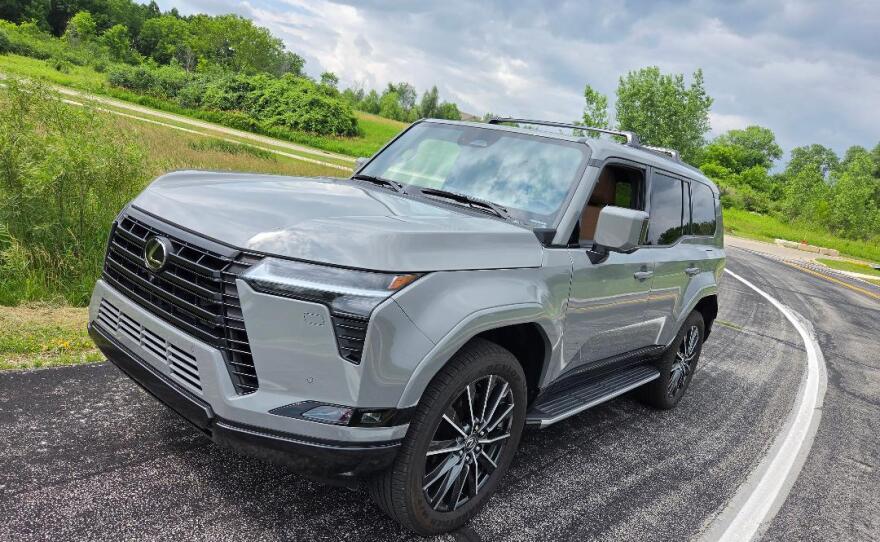
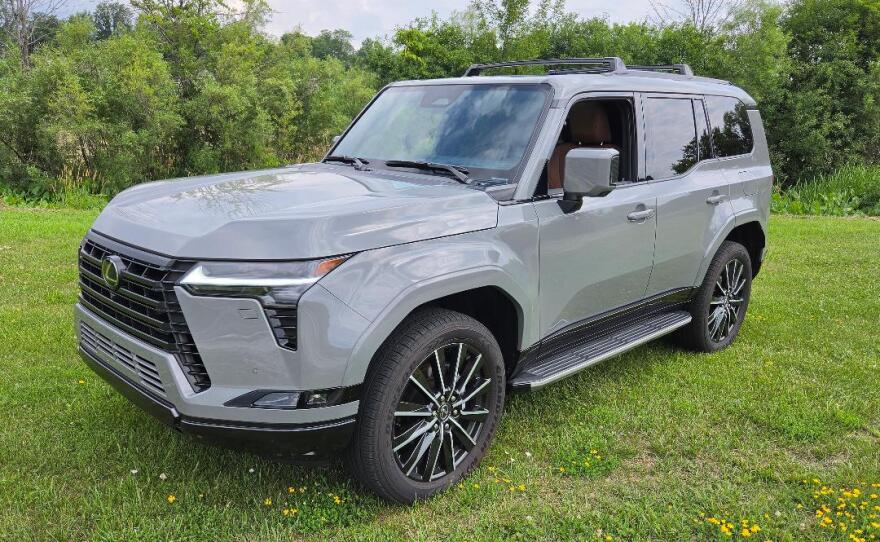

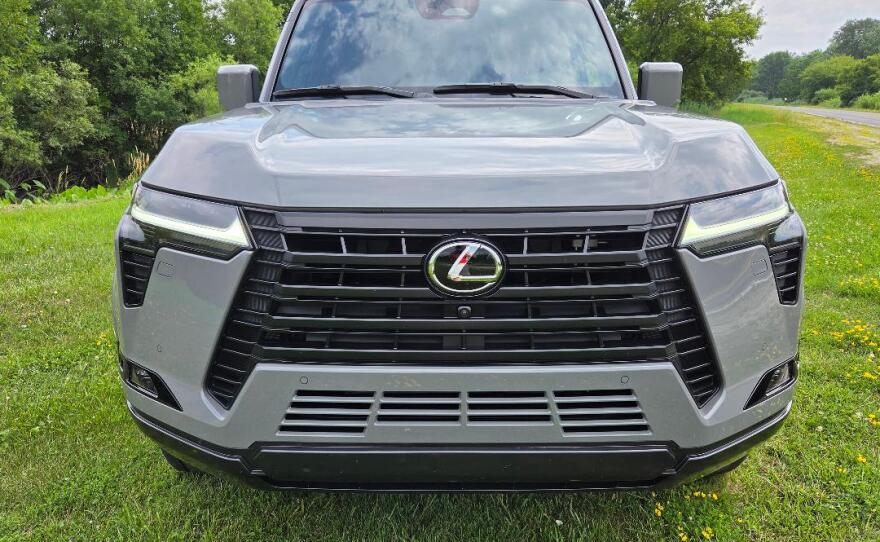

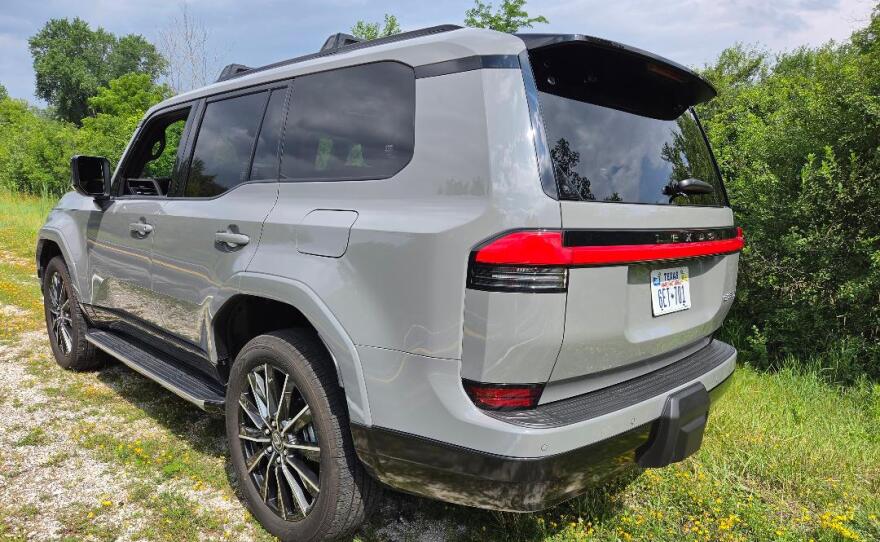


The Lexus is powered by a silky smooth 3.4-liter twin-turbo V6 that cranks 349 horsepower and 479 pound-feet of torque. It is rated at a paltry 15 mpg city and 21 highway. I managed 16.9 mpg mostly around town and 20.5 mpg in mostly highway driving.
Toyota’s version, the Land Cruiser, is powered by a 2.4-liter I-Force turbo I4 hybrid that delivers 326 horsepower and 425 pound-feet of torque. It is rated 22 mpg city and 25 mpg highway. When I tested it last year I managed 19.6 mpg, in winter.
The Lexus tows up to 7,844 pounds while the Toyota tows 6,000 pounds. Note that a special Lexus GX Overtrail trim without a third-row seat will tow 9,096 pounds, so would be the better option if towing AND off-roading are your main concerns. The Overtrail is further enhanced for off-road duty.
That’s not to say the tested Lexus GX 550 Luxury isn’t off-road capable. Certainly, it is and provides 8.7 inches of ground clearance along with a console toggle to allow quick shifts into 4WD low-range.

A reminder, too, from when this was re-launched in 2024, the GX and Land Cruiser have both grown in length and width.
The Lexus focuses on luxury, especially in the Luxury trim, which has a starting price of $80,200 with delivery.
This powertrain is smooth with near seamless shifts from its ten speed transmission and will power the Lexus up to highway speeds and beyond quickly, despite weighing in at 5,467 pounds. Interior is quiet too.
Handling is probably the most positively surprising function in that the GX is easy to turn into a corner or park. Steering feel is moderate and there’s a precision I didn’t feel in last week’s fine Kia Telluride SUV, or some other large utes.
However, ride was the big negative surprise. Last review I’d felt it a big improvement over previous GX models, but in this Luxury edition it was trucky and abrupt on cracked and crumbling city streets. This is a body-on-frame truck, like a pickup, so I shouldn’t have been so shocked.
A friend described the ride as being like you were a kid talking into a turning fan. That’s how a passenger sounded as he talked during a particularly rough stretch of road, sort of like Max Headroom (remember him?). This was on the Normal drive mode. Eco was no better and Sport tightened things even more. All luxury SUVs need a Comfort setting that severely softens ride dampening to ease the beast over RR tracks, potholes and street cracks and crevices. Especially at an $80k+ price.
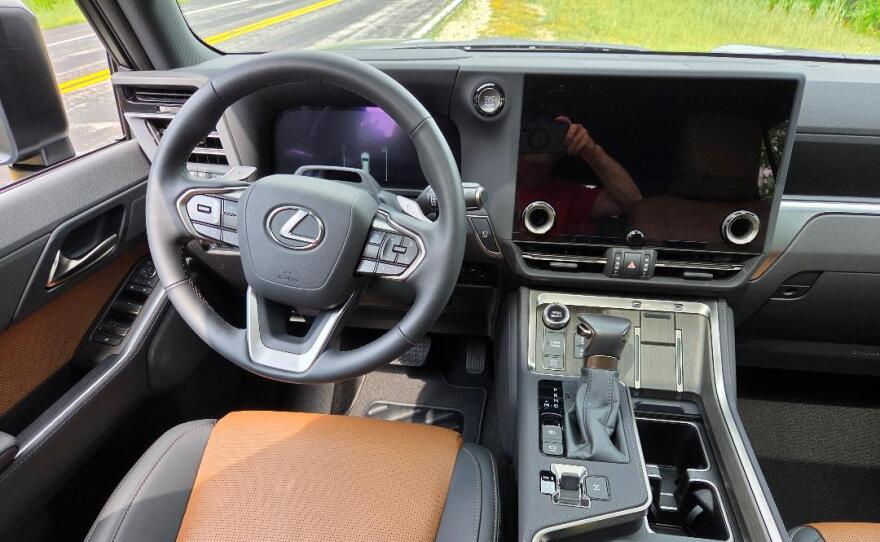
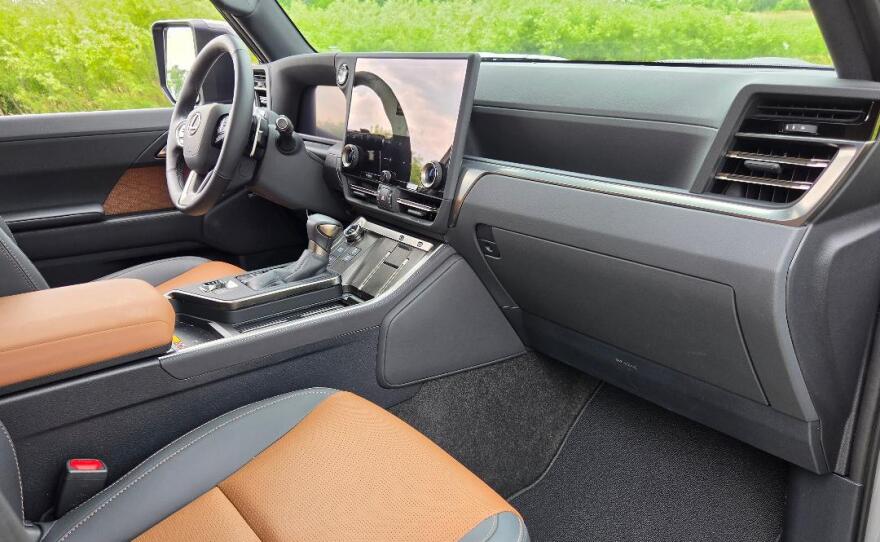

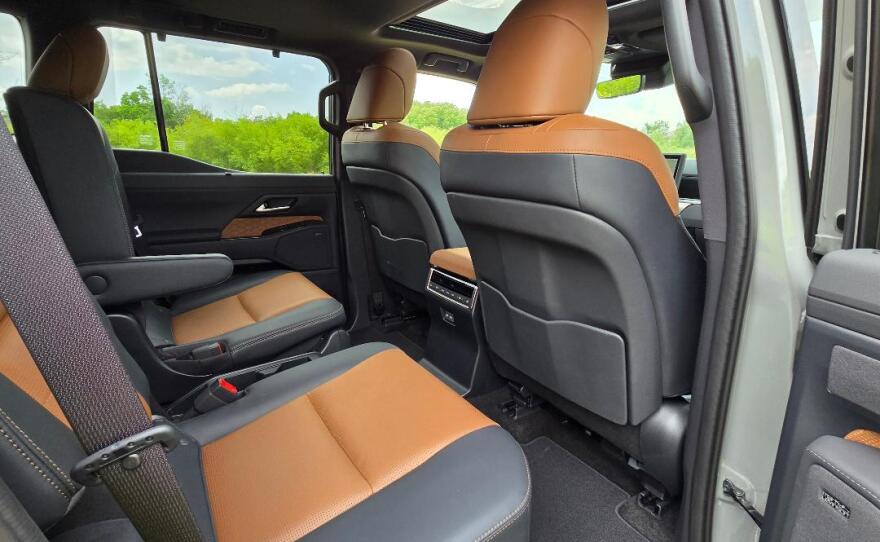
Inside, well luxury rules any Lexus interior. The Incognito (medium gray) GX 550 Luxury tester touted tan and black leather seats along with similar door trim, although there the tan is a cloth material. Door releases and air vents are a satin chrome for a refined jeweled look while there’s a flat black leather console top with black wood trim under the center stack.
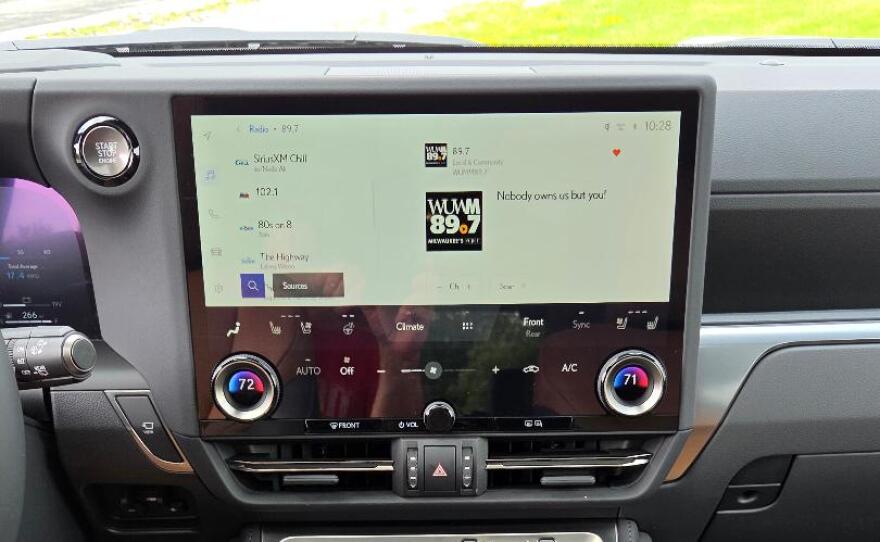
The info screen is a full 14 inches and simple to use, much better than the old center console control knob. The driver’s instrument panel also can be adjusted to show various functions and the thick leather steering wheel is a power tilt/telescope model.
Seats are powered and well-formed for long-drive comfort. However, at this price I was surprised to find no massaging feature, at least for the driver. Last week’s Kia Telluride had that at a considerably lower price point.
Front seats do have a three-level automatic heat/cool feature though. So set it and forget it. Captain’s chairs in row two also were heated, a $440 option.
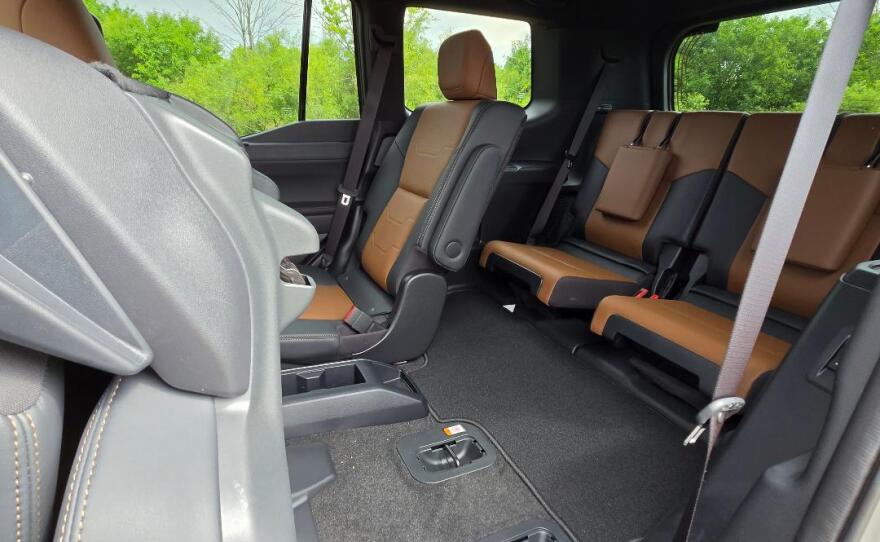
Both front two rows are spacious and comfortable, with row two having its own climate controls and overhead air vents. Row three is relatively tight for adults, but if the row two seats are far enough forward the back row can be passable for adults on a trip.

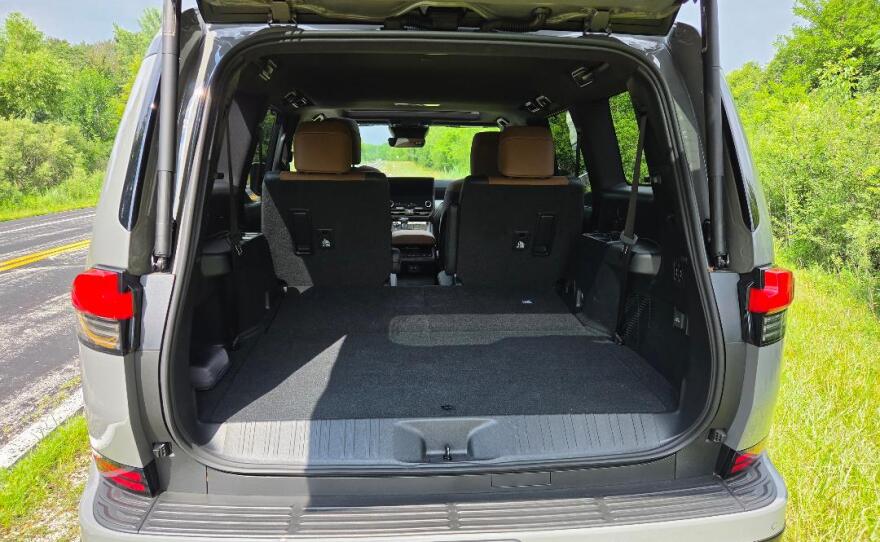
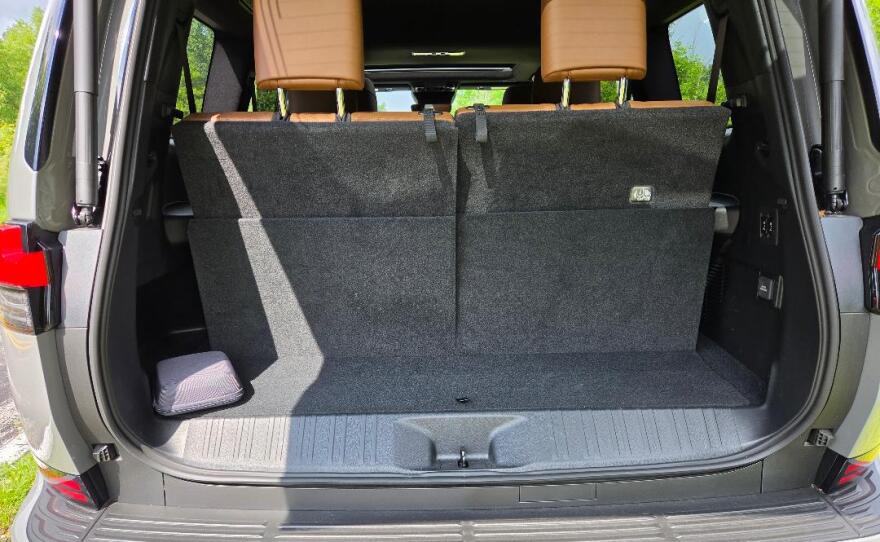
However, note that if the third-row seats are being used there is virtually no cargo space, just 10 cubic feet, behind them. Four grocery bags will fit side by side. If no one needs the rear seat they are easily powered down, or up, via buttons under the power hatch. Note, too, that this is a split hatch, so the rear window can be popped up for loading or carrying longer loads, such as lumber.
Other pluses include a 3-memory driver’s seat, a heated steering wheel, moderate-sized sunroof over the front seat, and a wireless phone charger in the console. There’s an issue there though, the phone charger is “mostly” rectangular, but with a slight indent in one corner that prohibited my new Android Samsung from laying flat and being charged. Seems a design flaw.
There are charging ports under the center stack, and in the other rows, so bring a cord and you’ll be fine. But really!
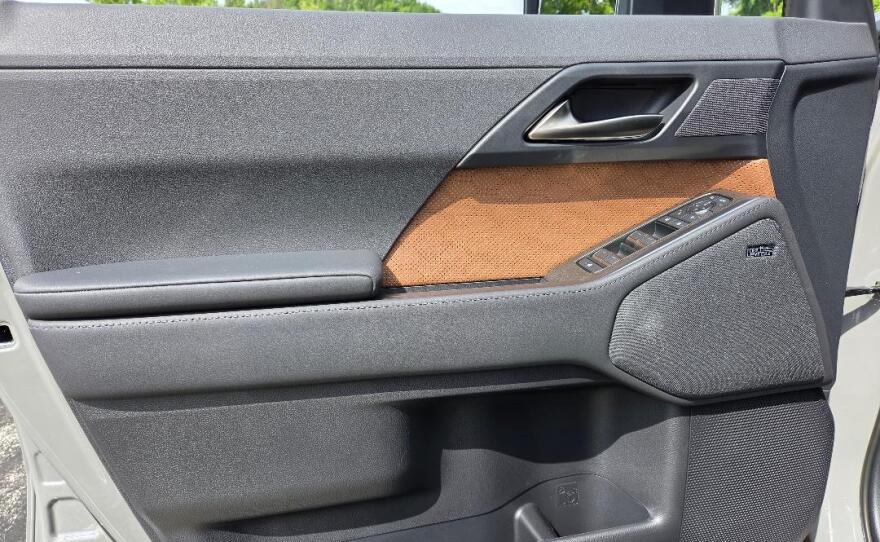

Praise though for the 21-speaker Mark Levinson premium sound system. This sounds great, but boost the bottom line by $1,140.
Seven other options, including a $900 HUD and $440 worth of crossbars on the roof rack, pushed the tester to $84,494.
Standard though are running boards (much needed), a panoramic view monitor and full suite of safety equipment.
Missing is a standard navigation system (always nice to at least have a digital map), plus Lexus sticks with a somewhat hidden (no white fuel pump icon) fuel filler door release under the dash’s left side. That’s rather passe as most vehicles now allow a gentle tap to open the fuel filler door.
Also note the awkward dash air vents with a solid horizontal bar in their middle. That prevents adjusting the vents to direct air to a driver’s face. This is the second vehicle I’ve tested with this solid bar design, and it needs to stop. Fresh air to a driver’s face often helps prevent drowsiness on a long drive.

Finally, retro muscular squared styling makes this look a lot like a Mercedes-Benz G Wagon or Range Rover, but then that’s the target market and competition Lexus is aiming at. More realistically the competition is its own TX model that’s a bit larger with more room in row three seats. A few others to consider include the Volvo XC90, Lincoln Aviator, and Acura MDX.
If one prefers to save some coin, but like the GX’s look, a base Premium model lists at $68,335. The tested Luxury is number four in the trim lineup, while a Luxury+ model tops the range at $84,800. Leasing is an option!
FAST STATS: 2026 Lexus GX 550 Luxury
Hits: Smooth power and shifts, solid off-road ability, easy handling for big truck, AWD. Big touchscreen, power tilt/telescope wheel, 3-level heated/cooled comfy front seats, 3-memory seats, heated wheel and rear seats, sunroof, wireless charger, fancy Levinson stereo, power-down third-row seats, power split hatch, running boards, good safety equipment, panoramic view monitor and 3 drive modes. Retro styling.
Misses: Abrupt ride on cracked city streets, third row still tight, awkward dash air vents, inside fuel release door, phone charging pad not rectangular, no massaging seats or navigation system.
Made in: Japan
Engine: 3.4-liter twin-turbo V6, 349 hp/479 torque
Transmission: 10-speed automatic
Weight: 5,467 lbs.
Wheelbase: 112.2 in.
Length: 197.1 in.
Cargo: 10/76.9/90.5 cu.ft.
Tow: 7,844 lbs.
Ground clearance: 8.7 in.
MPG: 15/21
MPG: 16.9-20.5 (tested)
Base Price: $80,200 (includes delivery)
Invoice: $73,900
Major Options:
Heated row 2 captain’s chairs, $440
Cold pkg. (heated headlight washers, windshield de-icer), $200
Digital key, $375
Head-up display, $900
Mark Levinson premium audio, $1,140
Traffic Jam assist, $620
Roof rack cross bars, $440
Ball mount, $80
Wheel locks, $99
Test vehicle: $84,494
Sources: Lexus, www.kbb.com